Villas in Crete with heated pools are a small share of the island's rental stock, and the listings that mention heating rarely explain what it actually delivers. This guide covers how villa pool heating works in practice, the months where it changes a holiday and the months where it makes no difference at all, and the questions that separate a genuinely heated pool from a marketing line. It also looks at what heating typically adds to the cost and which regions carry the most of these properties. A short, practical read before a spring or autumn booking.
Quick Summary
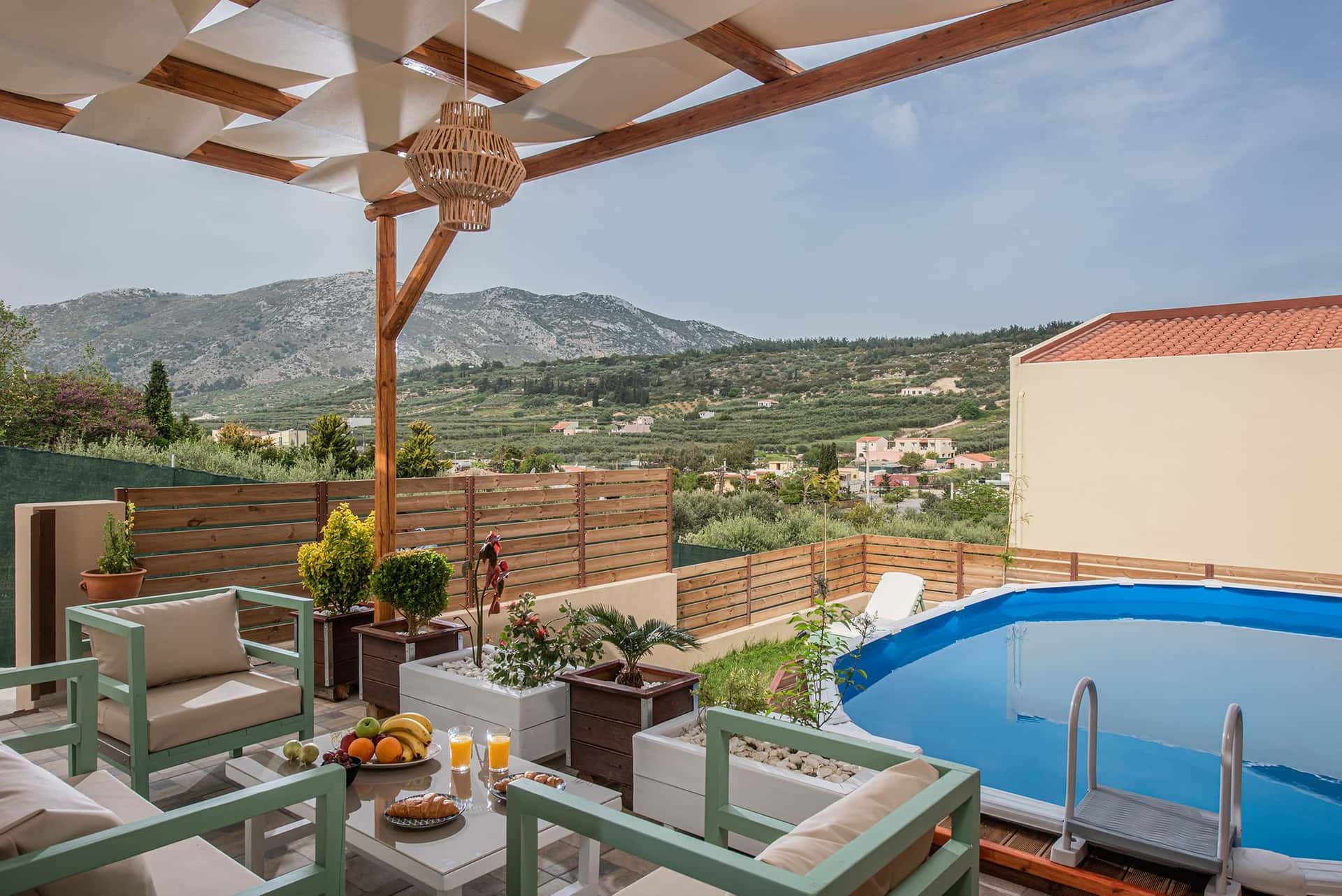
Villas in Crete with heated pools are uncommon. On most rental portfolios covering the island, heated properties account for a single-figure percentage of the total, and the ones that exist tend to sit in the Chania and Rethymno countryside where villa owners have invested in extending their own season.
Heating matters in five months of the Cretan year: April, May, late October, November and the March shoulder. It is irrelevant from mid-June to early October, when the sun does the work for free. Heating is also almost always chargeable as an extra, usually per week, and often needs to be requested before arrival rather than switched on mid-stay.
Introduction
Crete has the longest tourist season of any Greek island, which is exactly why the heated pool question comes up. Travellers who avoid the August heat and the August prices land on April, May, October and November, and then discover that the pool they booked for is technically available and practically too cold to use.
Water temperature is the reason. A pool in an unheated Cretan villa tracks the air and the sun with a lag. By late May it becomes pleasant. By late October it has cooled again. In the weeks either side of that window, an unheated pool becomes a decorative feature. Villas in Crete with heated pools close that gap, and this guide explains what they do and do not deliver.
This is a narrow question sitting inside a broader one. If you are still deciding on region, villa type and plot, start with the wider comparison of private-pool villas across the island and come back here once your travel month is fixed.
How Villa Pool Heating Works on Crete
Three systems appear on Cretan rental villas, and they behave very differently.
Heat pumps
The most common arrangement on newer properties. An air-source heat pump extracts warmth from the outside air and transfers it to the pool water. It works well in Crete's mild shoulder seasons because the ambient air stays relatively warm, and it can typically hold a pool at a set temperature rather than simply raising it. It draws electricity, which is why owners charge for it.
Solar heating
Solar panels or mats warm water as it circulates. Cheap to run and quiet, but weather-dependent and slow. Solar alone will lift a pool by a few degrees on a sunny spring day and lose most of that overnight unless the pool is also covered.
Boiler or exchanger systems
Less common on villas, more common on small complexes. These heat quickly and cost more to run, so owners often restrict them to specific months or charge a higher supplement.
Pool covers
Not a heating system, but the difference between a heated pool that works and one that disappoints. An uncovered pool loses a large share of its heat overnight through evaporation. If a villa advertises heating but has no cover, expect the system to be fighting the night every day.
Stay nearby
Stay in a private villa
View all villas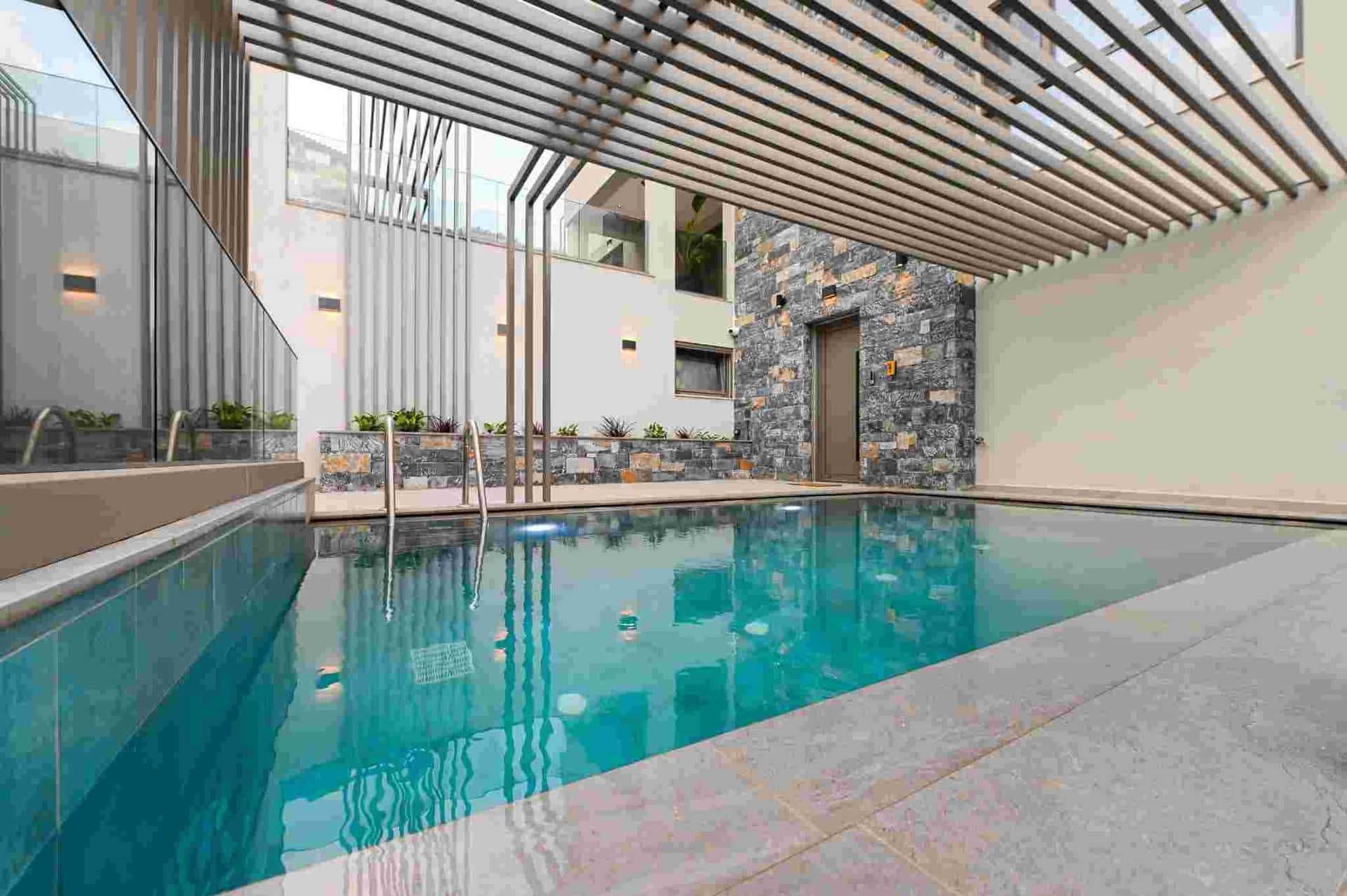
Which Months Actually Need It
The honest answer changes by month, and it is worth being specific rather than vague.
March and April: cool water, warm afternoons, wildflowers and green hills. This is when heating changes the holiday most. Without it, the pool goes unused.
May: warming steadily. By the second half of the month many guests swim comfortably in an unheated pool, especially inland where afternoons are hot. Heating is still a real upgrade in the first two weeks.
June to September: unnecessary. Cretan sun heats a pool to a comfortable temperature without help, and in August an unheated pool can feel warm rather than refreshing. Some owners will not run heating at all in these months.
October: the first half is usually fine unheated. The second half is where the temperature drops away and heating starts to matter again.
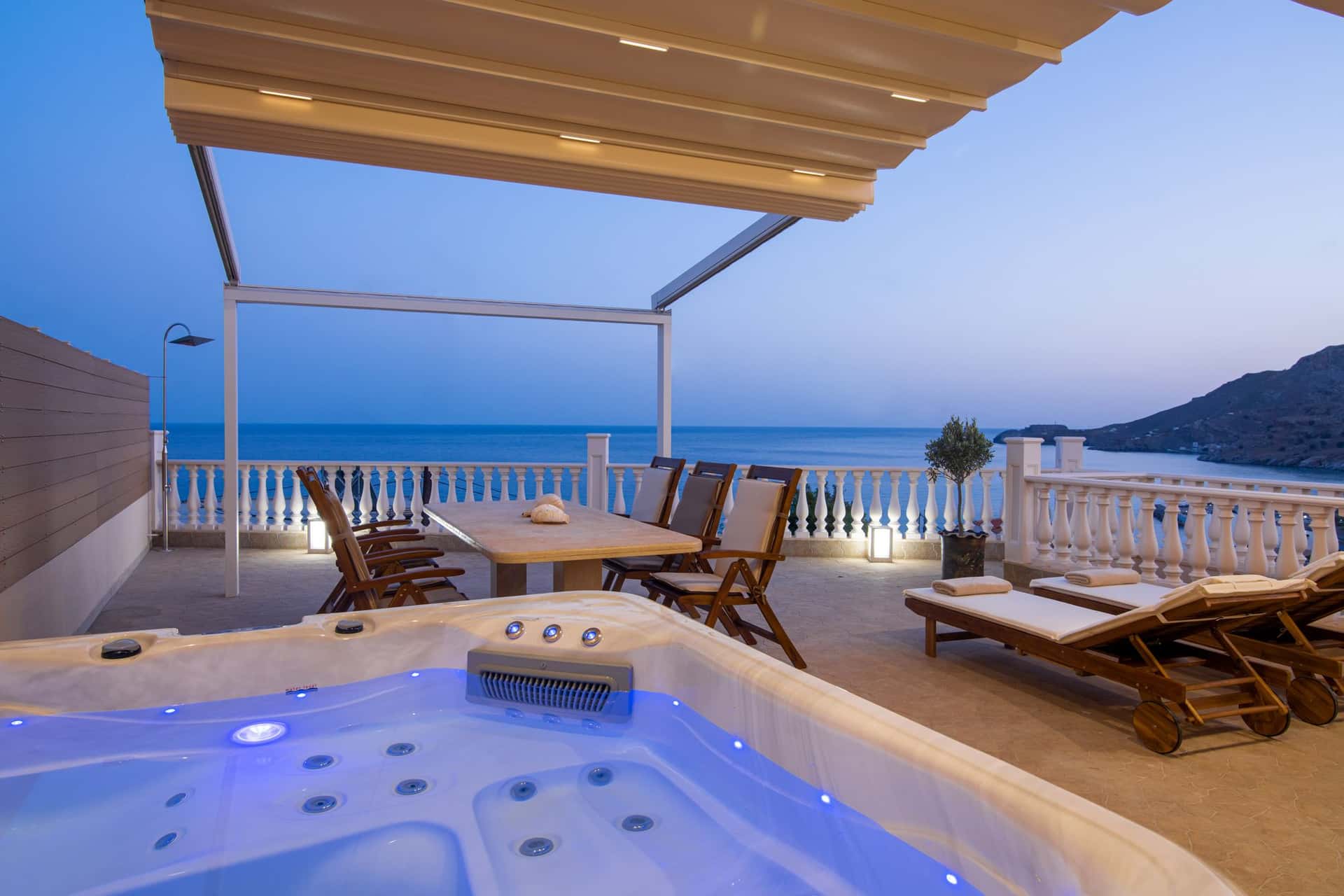
November to February: heating is the only thing that makes swimming realistic. Villas are inexpensive in these months and the island is at its greenest, so a heated pool is what turns a cheap off-season week into a swimming holiday.
What It Costs and How It Is Charged
Pool heating on Crete is nearly always an optional extra rather than an included feature. The usual pattern is a per-week supplement, requested at the time of booking so the owner or manager can prepare the system before arrival. Some properties set a minimum booking period for heating. Some restrict it to specific months. A few include it in the rate during the deep off-season, when it is effectively the only reason anyone would book.
Three practical points follow. First, ask for the charge in writing when you enquire, because it is rarely in the headline price and it is not always proportional to the length of the stay. Second, ask how far in advance the system needs to run. Heating a cold pool from scratch takes time, and a system switched on the morning you arrive will not be at temperature until day two or three. Third, ask whether the supplement covers continuous heating or a fixed number of hours a day, because a pool heated only in the mornings behaves quite differently from one held at temperature around the clock.
Running costs also explain why owners are cautious. Electricity in Greece is not cheap, and a heat pump working against a cold night on an uncovered eight-metre pool consumes a meaningful amount of it. An owner who quotes a low supplement and has no cover may be planning to run the system sparingly.
How to Confirm a Pool Is Genuinely Heated
The phrase heated pool is used loosely across the rental market, so treat it as a claim to verify rather than a fact.
Ask which system is fitted, heat pump, solar or boiler, since that tells you how quickly and how reliably the pool warms.
Ask what target temperature the system holds. A specific number in reply is a good sign. Vague reassurance is not.
Ask whether there is a pool cover and whether guests are expected to use it overnight.
Ask which months heating is offered, because many owners will not run it outside a defined window.
Ask what it costs and whether it must be booked in advance.
Ask about the pool's size and depth as well. A large deep pool takes considerably longer and costs more to heat than a compact one, which is why smaller pools are often the better choice for a spring or autumn stay.
Where to Find Villas in Crete with Heated Pools
Heated pools cluster where owners have a commercial reason to extend the season, which means the distribution across the island is uneven.
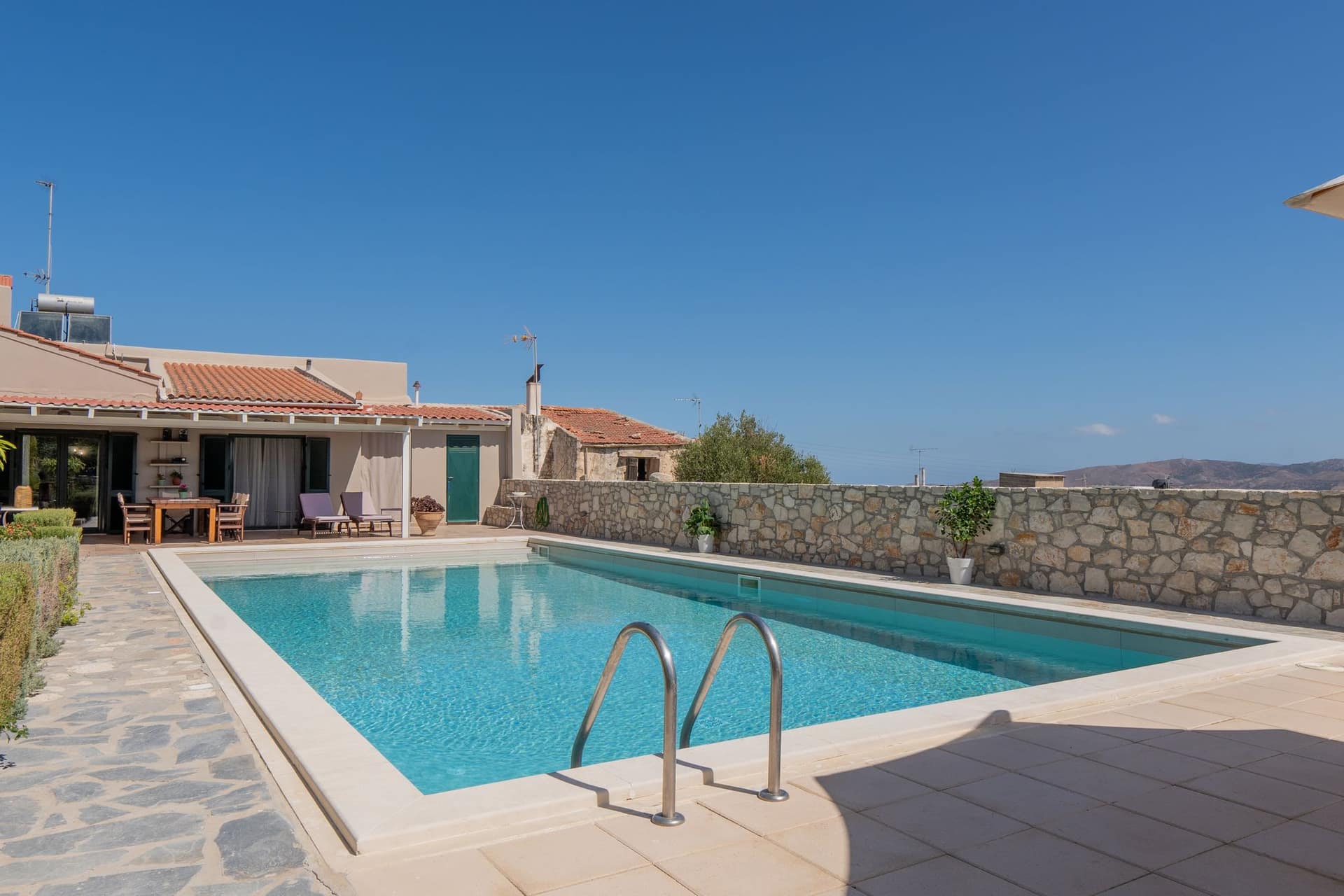
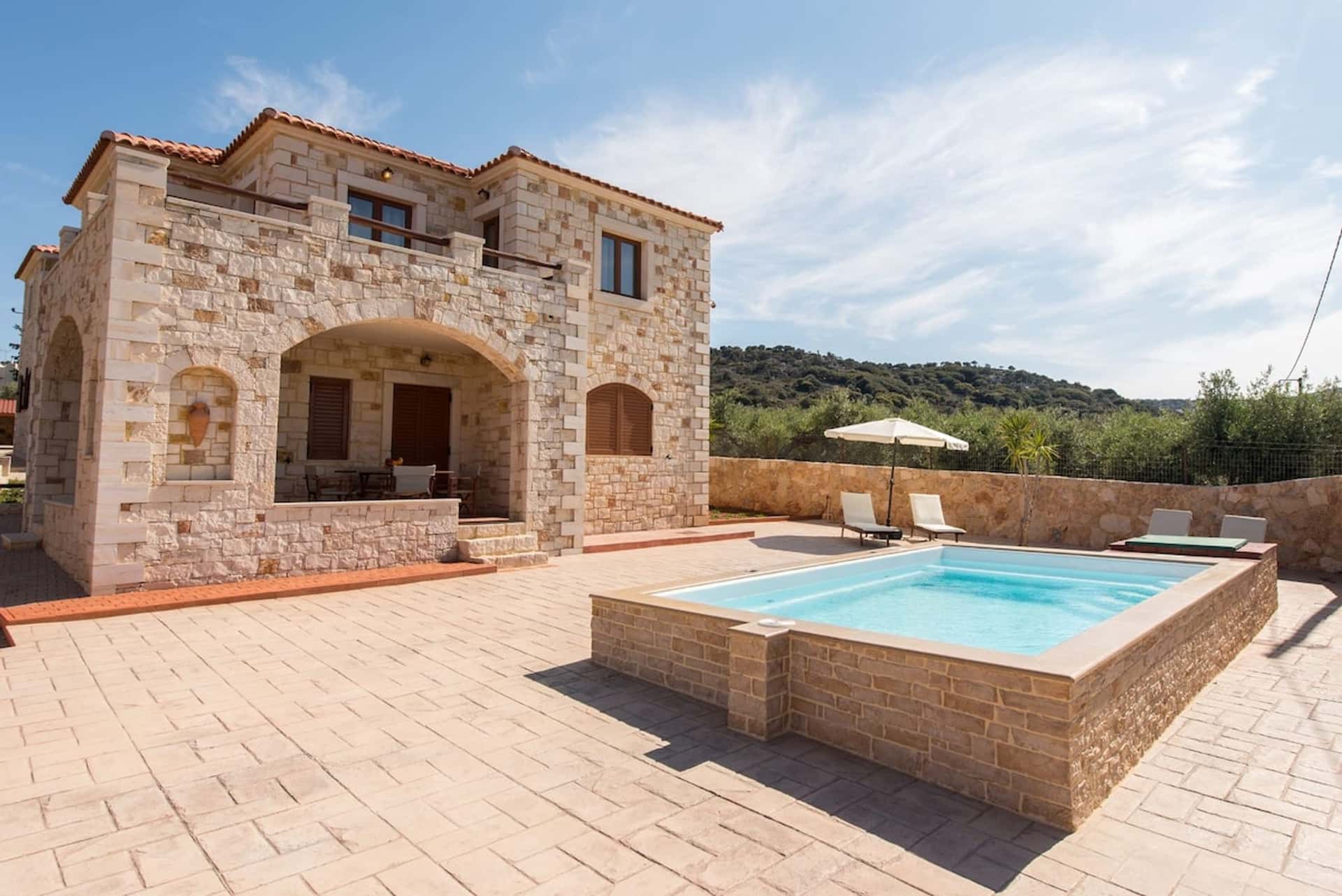
In Chania, the Apokoronas hills behind Souda Bay hold a long-established villa rental market with a high proportion of repeat guests who travel outside high summer. Heating appears more often here than the island average, and the stone-built hillside houses around villages such as Vamos, Gavalochori and Kefalas are the usual candidates.
In Rethymno, the inland villages between the coast and the mountains have a similar profile, with countryside villas whose owners chase spring and autumn bookings. These are often modern builds where a heat pump was fitted at construction rather than retrofitted.
In Heraklion and Lasithi, heated pools exist but are scarcer. The eastern half of the island holds its warmth well into October, which reduces the pressure on owners to install systems, and the villa stock in Lasithi is smaller overall. Where heating does appear in the east, it tends to be on larger properties at the upper end of the market.
None of this means you should choose your region because of heating. Crete's regions differ far more in character, drive times and scenery than they do in the availability of a warm pool. Pick the region for the holiday you want, then filter for heating within it, and be prepared to accept a slightly smaller shortlist than you would have in July.
One more practical note on availability: because heated properties are a small pool of stock, they book out early for the exact weeks when heating matters. Easter, the May half-term and the late October break are the pinch points.
Weather Around the Pool
A heated pool is only half of a shoulder-season stay. The air matters too.
Spring on Crete brings warm afternoons and cool evenings, so an outdoor dinner in April usually needs a jumper by ten. Look for a villa with a fireplace or effective indoor heating, since Cretan houses are built to shed heat rather than hold it.
Autumn runs warmer for longer. October evenings on the coast are often still comfortable outside, and the sea remains warm well after the pool has cooled, which is worth knowing if your villa is near a beach.
Wind is the underrated factor. A pool terrace exposed to the north can feel considerably colder than the thermometer suggests in spring. Sheltered terraces, walled gardens and courtyards hold warmth far better.
Stay nearby
Stay in a private villa
View all villas
Things to do
Experiences nearby
Hand-picked activities from Travelndo, our experiences partner in Crete.
Getting There and Around in the Shoulder Season
Flight schedules thin out either side of summer. Heraklion and Chania both keep year-round domestic connections through Athens, while direct international routes reduce sharply from November. Book flights before villas if you are travelling in the deep off-season.
Car hire is cheaper and easier to secure outside July and August, and the roads are quieter. Some mountain routes, including the higher passes, can be affected by weather in winter, so allow more time than a summer itinerary would suggest.
How to Choose a Heated-Pool Villa
Fix the month first, because that determines whether heating is a requirement or a luxury. Then decide how much you will actually swim: a group that plans two swims a day should prioritise heating far above a group that wants the pool mainly as a view.
Prefer a smaller, sheltered pool over a large exposed one for spring and autumn stays. Confirm the system, the cost and the lead time in writing. Check that the house itself is comfortable in cool evenings. Then judge the villa on everything else that matters, which is location, plot, privacy and layout.
Common Mistakes to Avoid
Assuming heating is included. It is usually a supplement, and often a substantial one.
Requesting heating on arrival. Most systems need a head start of at least a day, sometimes more on a large pool.
Booking a large pool for April. Volume works against you when the water needs warming.
Overlooking the cover. A heated pool without a cover loses much of its gain overnight.
Ignoring the house. A villa that heats its pool but not its living room makes for a cold April evening.
Choosing a villa on heating alone, when region, plot and layout will shape the week far more.
Where to Stay
For a spring or autumn stay with a heated pool, the Chania countryside and the Rethymno hinterland offer the deepest choice, along with green landscapes at their best in April and May. Heraklion works well for October, when the island is still warm and the archaeological sites are quiet. Lasithi is the calmest of the four regions in the off-season and holds its warmth late, though heated properties there are fewer.
Final Thoughts
Villas in Crete with heated pools solve a specific problem in a specific window. Between June and September they are irrelevant. In April, May, late October and the winter months they are the difference between a pool you look at and a pool you use.
Treat heating as one filter among several rather than the deciding factor. Confirm the system, the cost and the lead time before you book, choose a sheltered pool over a vast one, and make sure the house is as comfortable as the water when the evening cools.
Image alt text suggestions: