Getting around Crete is the one planning decision that shapes everything else about a villa holiday on the island. Crete stretches roughly 260 km from end to end, so the gap between a relaxed week and a frustrating one usually comes down to transport. This guide compares rental cars, KTEL buses, taxis, transfers and ferries, with honest advice on costs and timings. It also explains what each option means for reaching a villa rather than a hotel, region by region.
Quick Summary
Getting around Crete takes more thought than on smaller Greek islands because Crete is the largest island in Greece, roughly 260 km long and 60 km wide. A rental car is the most flexible option and close to essential for countryside and secluded villas, with typical rates between 40 and 80 euros per day in high season. The KTEL intercity bus network is reliable and cheap along the north coast, with fares from roughly 2.30 to 18 euros, but service thins out fast in the south and inland. Taxis work well for short hops and airport runs, ferries connect the south coast villages that roads barely reach, and pre-booked transfers remove all guesswork on arrival day. Most villa guests end up combining two or three of these options, and this guide shows how, region by region.
Introduction
Ask anyone who has planned a first trip to Crete what surprised them most and the answer is usually the same: the size of the island. On a map of Greece, Crete looks like a manageable strip of land. In reality it is the fifth largest island in the Mediterranean, with three mountain ranges, one fast highway along the north coast and a tangle of slow, winding roads everywhere else.
That scale is exactly why the island rewards villa travellers. Distances keep the mass-tourism crowds pinned to a few resort strips, while the rest of Crete stays quiet. But it also means transport deserves a proper place in your planning, right next to choosing the villa itself. A stone villa above Kato Archanes and a beachfront villa in Anissaras may sit only 30 km apart, yet they call for different transport decisions.
This guide covers every practical way of getting around Crete: rental cars, the KTEL bus network, city buses, taxis, private transfers, south coast ferries, and the scooters and quad bikes you will see parked outside every rental office. For each you will find realistic costs, limitations, and what it means for reaching a villa rather than a hotel.
Why Transport Shapes a Villa Holiday
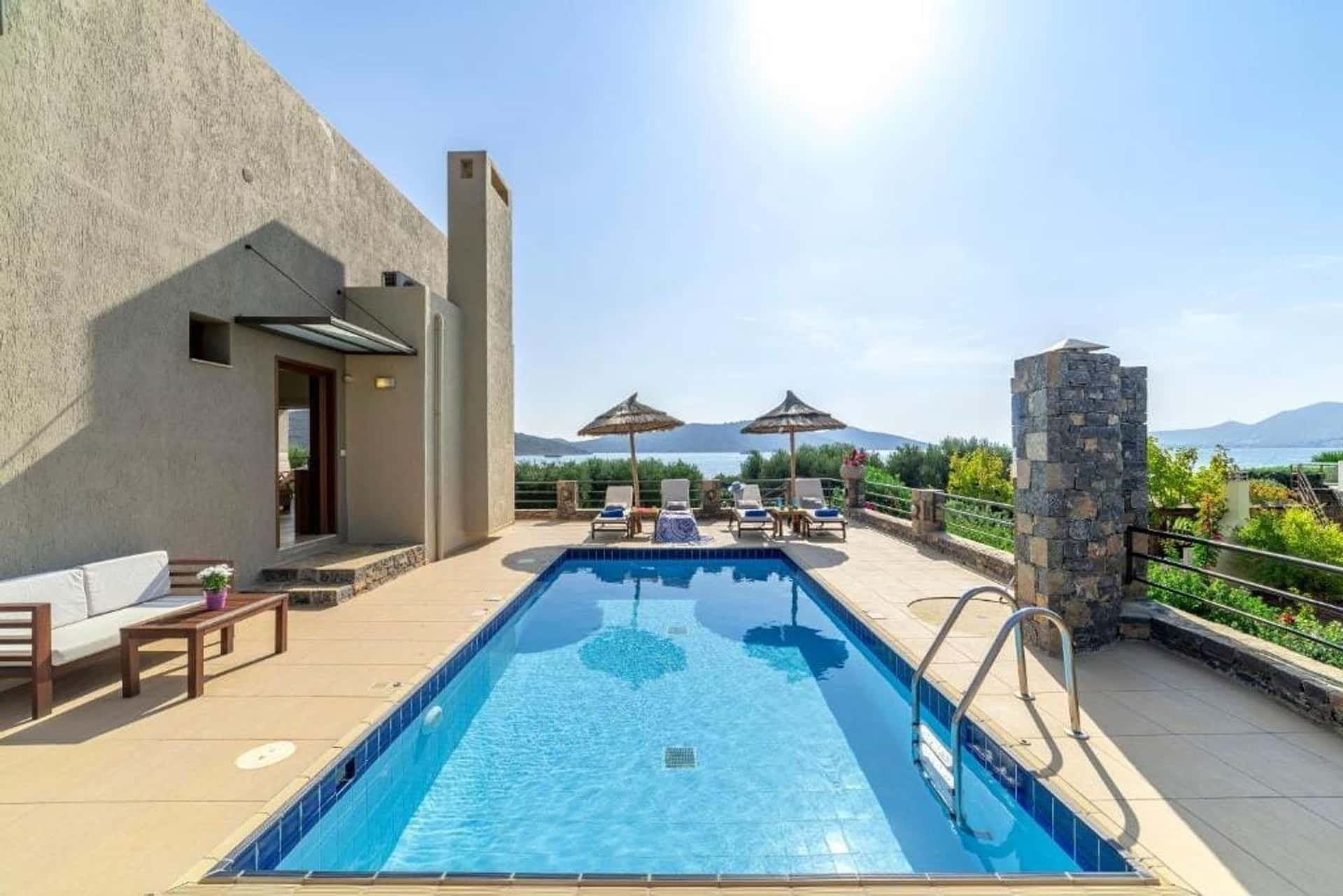
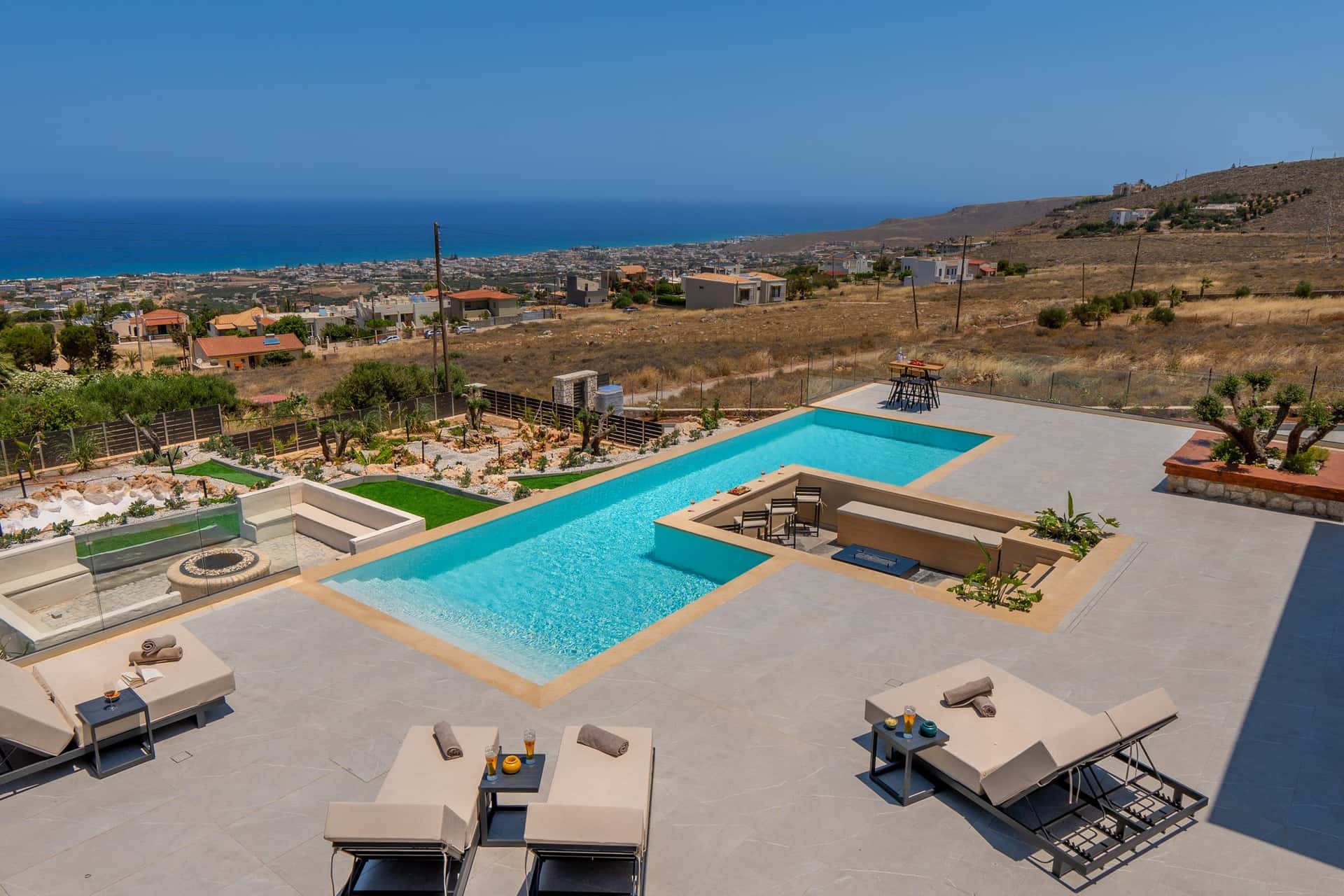
Hotels cluster where the infrastructure already is. Villas, by design, do not. The privacy, the views and the space that make a private villa worth booking usually come from being a little removed: a hillside above a village, an olive grove outside town, a quiet lane behind a beach.
That changes the transport question in three ways. First, the last kilometre matters. A bus can bring you to a village square, but rarely to a gate at the end of a farm track. Second, a villa holiday runs on supplies. You will shop at supermarkets and local producers rather than eating every meal out, and carrying a week of groceries without a car gets old quickly. Third, villas free you from a schedule, and it would be a shame to hand that freedom back to a bus timetable.
None of this means every villa guest must drive; villas within walking distance of towns like Hersonissos or Kokkini Hani work well with buses and taxis. It does mean the transport plan and the villa choice belong together.
The simplest way to use this guide is to decide the transport style first and then the address. We manage both kinds: villas in walkable resort areas on the north coast bus line, and countryside houses that assume a car and repay it.
Stay nearby
Stay in a private villa
View all villas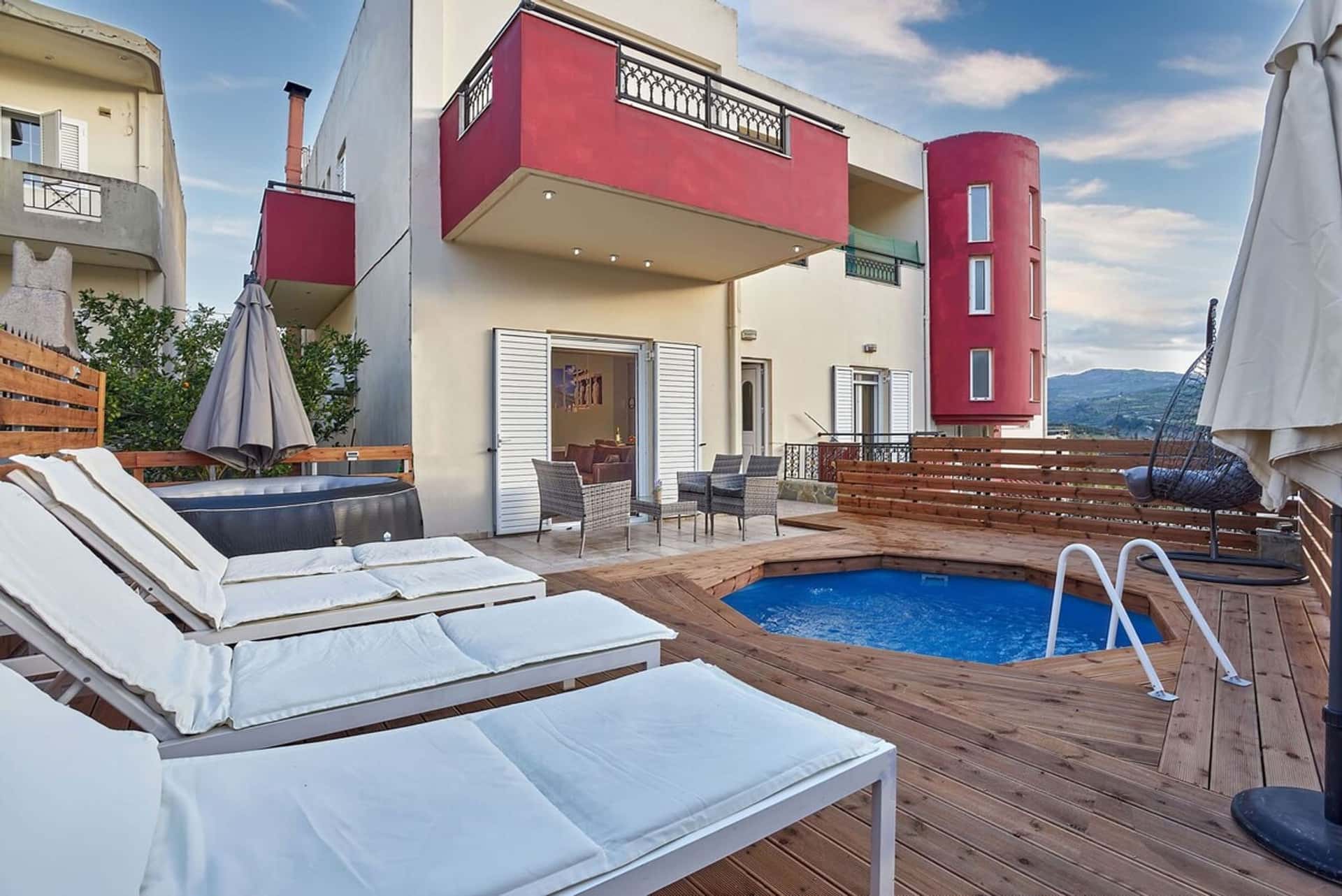
Getting Around Crete: The Main Options Compared
Renting a Car
A rental car is the default answer for a reason. It is the only option that reaches everything: mountain villages, remote beaches, archaeological sites at opening time before the coaches arrive, and the villa gate itself.
Expect prices between 40 and 80 euros per day for a compact car in summer, less in shoulder season, excluding fuel. Booking well ahead matters more in Crete than in most destinations, because high-season demand outstrips supply and on-the-spot rates are steep. Local companies often price better than the multinationals, and cars can be collected at Heraklion Airport, Chania Airport and in every major town. Many agencies deliver cars directly to villas, which is worth asking about.
Licences from the UK, the United States, Canada, Australia, Japan and South Korea are valid on their own in Greece for stays of up to six months; other non-EU licences need an International Driving Permit alongside them. Rental desks set their own rules on top of the law and Cretan offices often ask for the permit anyway, so carrying one removes an argument at the counter. If your villa sits up a steep drive, as many hillside properties do, skip the cheapest city model. Automatics sell out first, so book early if you cannot drive a manual.
KTEL Intercity Buses
Crete has no railway, so land transport is buses. The intercity network is run by two KTEL companies, one covering Chania and Rethymno in the west, the other Heraklion and Lasithi in the east, while the bigger towns run their own separate urban operators. Along the north coast the service is reliably good: clean, air-conditioned coaches run between Chania, Rethymno, Heraklion and Agios Nikolaos at regular intervals through the day in summer.
Sample one-way fares give a feel for the pricing, after the national fare rise of March 2026: Chania to Rethymno 7.80 euros, Heraklion to Rethymno 9.90 euros, Chania to Heraklion 17.60 euros, and Heraklion to Sitia 17.60 euros. Short local hops such as Heraklion to Kokkini Hani start around 2.30 euros. Tickets are sold online through the official KTEL booking sites, at station offices, and often on board along the north coast.
The catch is coverage. South coast and inland villages may see one or two buses a day, sometimes none out of season. Heraklion has two stations to know about. The Central Bus Station on Ikarou Avenue near the port handles both the north coast line and the southern Messara routes to Mires, Phaistos, Matala and Agia Galini. The smaller Chanioporta station now serves the inland villages, Anogia and Krousonas among them.
City Buses in the Main Towns
Chania and Heraklion run proper urban networks reaching suburbs and nearby beaches within 5 or 6 km of the centre, and since March 2026 they charge the same: 1.30 euros for a Zone A ticket bought from a kiosk or the app, 1.80 for Zone B, and a euro more if you buy from the driver. Agios Nikolaos runs free municipal city buses, and local runs around Rethymno are KTEL services rather than a separate town network. The Heraklion city network is handy for villa guests: it links the airport, the port area and Knossos, so a carless sightseeing day in the capital is easy.
Taxis and Private Transfers
Taxis are easy to find in the towns, at airports and ports, and they fill the gaps that buses leave. Short rides within a town centre typically cost 5 to 10 euros. Airport runs are moderate: about 19 euros from Heraklion Airport into the city by day and 22 euros between midnight and 5 am, around 30 euros from Chania Airport into Chania town. Long cross-island rides get expensive fast, with Heraklion to Chania quoted well above 130 euros, so a taxi is a connector, not a touring plan.
Two local rules save money and mood. Agree the fare before setting off whenever the route is not a fixed one, and know how the second tariff works. Greeks call it the double tariff, but it is about 40 per cent dearer rather than twice the price, and it applies between midnight and 5 am anywhere, and at any hour once you leave the town boundary, which is the real reason cross-island runs cost what they do. Ride-hailing apps exist here in a limited form: FREENOW covers Heraklion, Hersonissos and Rethymno, and Bolt has been extending across the island, but both dispatch licensed metered taxis rather than private drivers, which have been banned in Greece since 2018. For arrival day, a pre-booked transfer with the villa address supplied in advance is the calmest start, especially for families landing late or groups with lots of luggage.
South Coast Ferries and Boat Trips
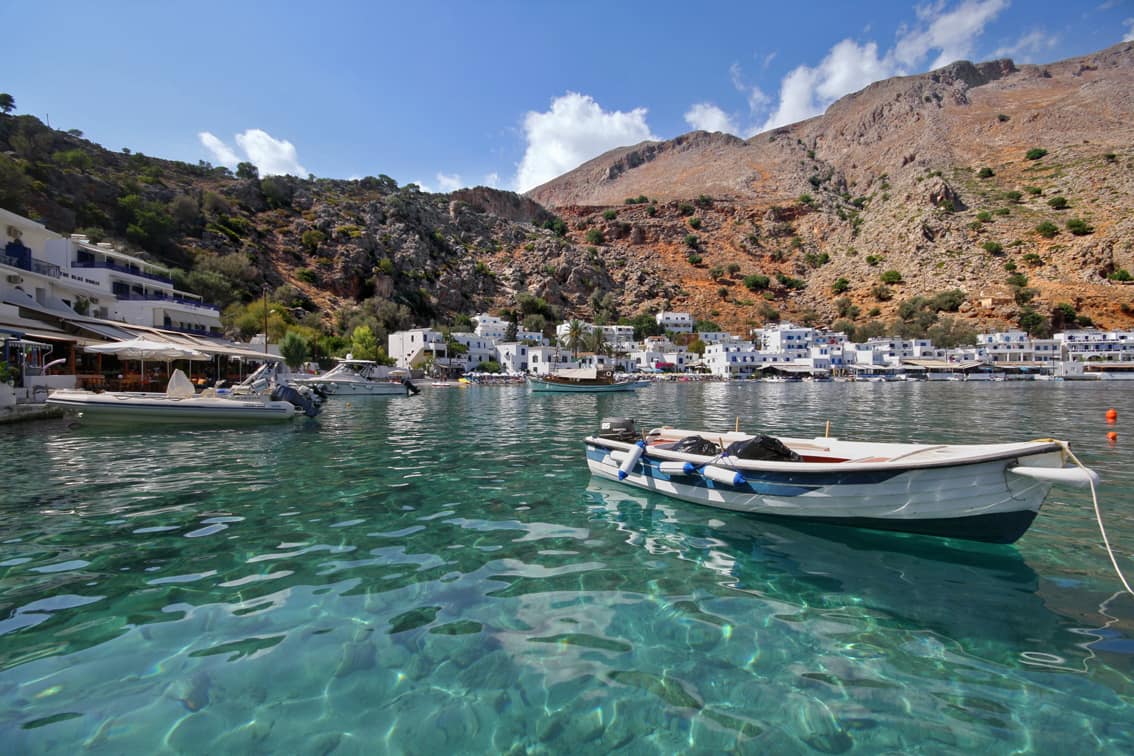
The southwest coast is Crete at its wildest, and parts of it have no through road at all. Small local ferries link Chora Sfakion, Loutro, Agia Roumeli, Sougia and Paleochora, with connections to Gavdos, the southernmost island in Europe. Loutro and Agia Roumeli cannot be reached by car at all, which is precisely their appeal, and the boat from Sfakia to Loutro takes about 20 minutes. Fares start around 11 euros for that short hop and run to about 35 euros for the full Sfakia to Paleochora leg, with Gavdos around 30 euros.
Ferries also serve the classic boat days out: Balos and Gramvousa from Kissamos port, and Spinalonga from Elounda and Agios Nikolaos. One rule applies to all of them: the sea decides. Rough weather cancels sailings, so keep boat days flexible.
Scooters, Quad Bikes and Buggies
Every resort town rents scooters, with a 50cc from roughly 15 to 30 euros per day depending on the operator and the month, a 125cc from about 30, and quad bikes and two-seat buggies costing more. They suit short-range exploring, up to 20 or 30 km, and the hop between a villa and a nearby beach. They are the wrong tool for crossing the island: rural roads are unlit at night and surfaces deteriorate off the main routes. Check helmet and licence rules with the rental office.
Getting Around Each Villa Region
Chania
Chania has the island's second airport and a strong KTEL hub, with buses west toward Kissamos and Falasarna, south to Omalos for the Samaria Gorge, and east along the coast. Villa guests based near the city can manage several carless days: the old town, the urban beaches and the gorge bus all work without driving. The famous western beaches, Balos and Elafonisi, are reachable by tour or seasonal bus, but a car makes them far easier and lets you arrive before the day-trip wave.
Rethymno
Rethymno sits halfway along the north coast, which makes it the best-connected base for seeing both ends of the island. Buses run frequently west to Chania and east to Heraklion. Countryside villas in the hills south of the town, around villages like those near the Amari valley, are a different story: this is car territory, with rewards to match, from mountain tavernas to the palm beach at Preveli on the south coast.
Heraklion
Heraklion is the arrival point for most villa guests, home to the island's main airport and port. The region's villa areas string along the coast east of the city: Kokkini Hani, Anissaras and Hersonissos all sit close to the old national road, which means regular buses into Heraklion and toward Agios Nikolaos, plus short taxi hops between resorts. Inland, wine country villages like Kato Archanes pair beautifully with a car, putting Knossos, wineries and the city within a 20 to 30 minute drive. Small coastal pockets west of the city, such as Ligaria, stay quiet precisely because buses mostly pass them by.
Lasithi and Elounda
Crete's eastern region rewards slow travel. Agios Nikolaos is the transport hub, with KTEL links west to Heraklion and east to Sitia. Elounda is a short, scenic hop north, with boats across to Spinalonga all day in season. Villa guests around Milatos and the quieter northeast coves will want a car for flexibility, though the Heraklion to Agios Nikolaos bus corridor covers the essentials. The Lasithi Plateau, ringed by windmills and mountains, is one of the island's best drives.
Weather and Best Time
Transport in Crete has seasons just like the beaches do. From June to September everything runs at full frequency: buses hourly on the main line, boats daily, rental fleets fully deployed and fully booked. Book cars and transfers earliest for this window; an early start beats a hot midday crawl.
Shoulder season, roughly April, May and October, is the sweet spot for drivers. Roads are quieter, rental prices drop and the light is kinder. The trade-off is thinner timetables: south coast ferries scale back and some village bus routes shrink. In winter the north coast bus line keeps running between the cities, but rural connections become sparse and mountain roads can see snow at altitude. If you visit outside summer and want to explore beyond the towns, a car stops being optional.
Getting There and Around on Arrival Day
Two airports serve the island: Heraklion Airport, the main gateway, and Chania Airport in the west. Ferries from Piraeus also arrive overnight into Heraklion and Chania, a comfortable option if you are combining Crete with Athens; the crossing takes around nine and a half hours.
The smoothest villa arrivals follow one of two patterns. Either collect a pre-booked rental car at the airport and drive straight to the villa with the exact pin location saved offline, or take a pre-booked transfer and have the car delivered to the villa the next morning. The second suits late-night landings; hunting for an unfamiliar villa gate on unlit lanes after a long flight is a poor start. Whichever you choose, send your host an arrival time in advance; most villa check-ins are personal, not a front desk.
How to Choose
Match the transport plan to the shape of your holiday rather than to a general rule. If your week is built around the villa itself, with pool days, local tavernas and one or two excursions, a transfer on each end plus a couple of taxi evenings covers it, and you can add a rental car for just two or three days in the middle. Most agencies happily rent short blocks.
If your plan is to see the island, budget for a car for the full stay and choose the villa for position: Rethymno for range, Chania for the west, Heraklion for sites and wine country, Lasithi for the east. Travelling without a car on principle? Pick a villa in walking distance of a bus-served town on the Chania, Rethymno, Heraklion or Agios Nikolaos corridors, then let boats and tours handle the far-flung days.
Large groups have one more option worth knowing: one car plus one transfer. A nine-person party rarely fits one vehicle anyway, so pairing a rented estate car with pre-booked transfers for the rest often beats wrangling two rentals.
Common Mistakes to Avoid
The classic error is underestimating distances. Chania to Elafonisi looks short on a map and is about 75 km of winding mountain road, an hour and a half each way before you count tour-bus traffic and parking; Heraklion to Balos is a full day, not an afternoon. Plan one region per day and the island feels generous rather than exhausting.
Other repeat offenders: renting on arrival instead of booking ahead, which costs real money in July and August; assuming buses reach south coast villages daily, when some see almost no service; forgetting the night taxi tariff; trusting a navigation app's shortest route, which in the hills can mean a single-lane concrete track; and forgetting that most fuel stations in Crete shut on Sundays, with a rota keeping one open per area that you cannot predict, so tanks are best filled on Saturday. Finally, do not book a secluded hillside villa and a carless holiday in the same breath. One of the two has to give.
Where to Stay
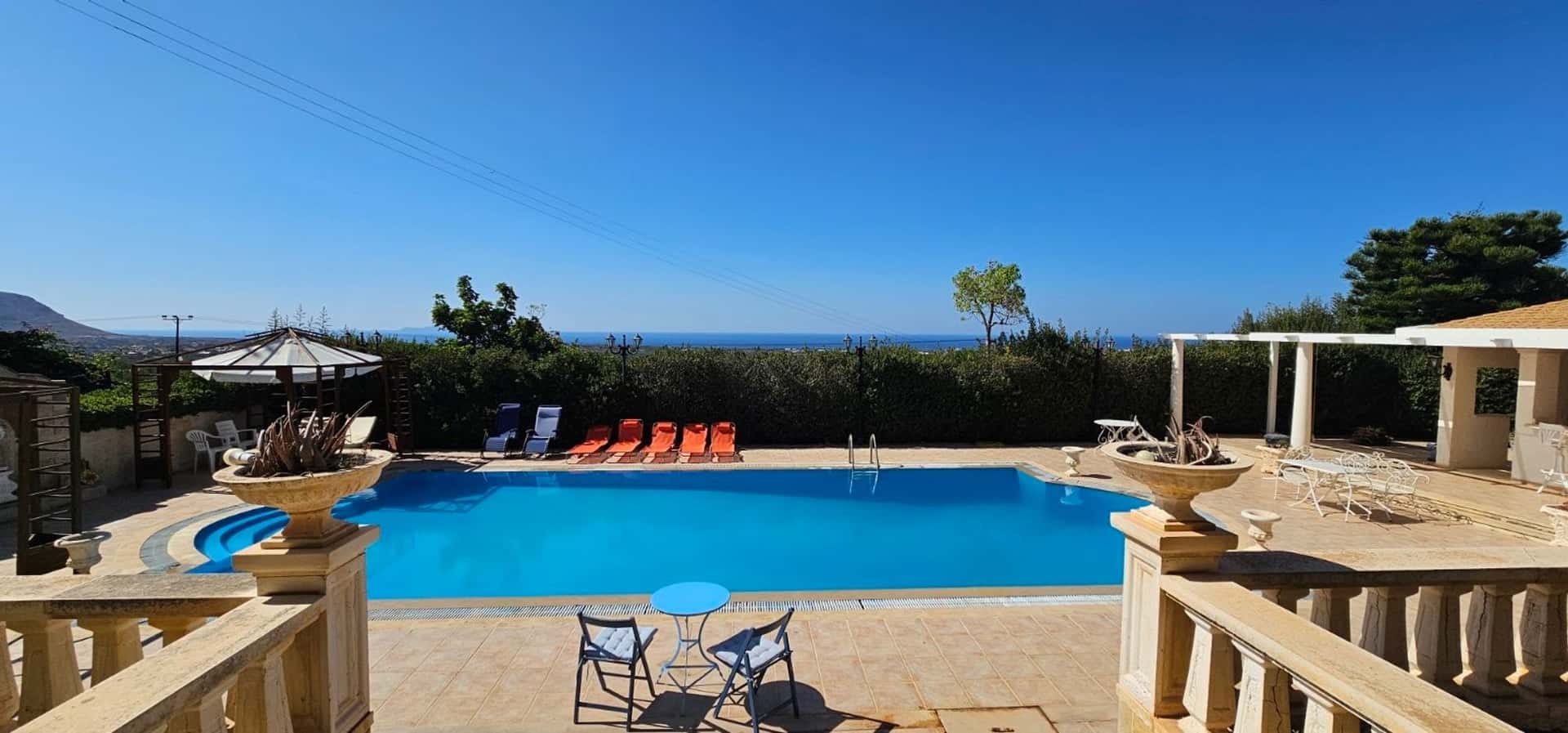
Transport and location are two halves of one decision, and this is where a villa specialist earns its keep. If you want to go carless for most of the week, look at villas around Hersonissos, Anissaras and Kokkini Hani, where the north coast bus line, taxis and a walkable evening are all close. If you are renting a car and want landscape in return, countryside villas around Kato Archanes or the quiet lanes near Milatos turn every drive into part of the holiday. For boat-led itineraries in the east, Elounda and the Agios Nikolaos coast put Spinalonga and the Mirabello Bay at your doorstep.
Every villa listing worth trusting states distances to the beach, the nearest town and the airport. Read those three numbers together with this guide and the transport plan writes itself.
Start with a shortlist of villas with private pools, then add a curated experience or two from Travel & Do for the days you would rather leave the driving to someone else.
Stay nearby
Stay in a private villa
View all villas

Frequently Asked Questions
Is it easy to get around Crete without a car?
Along the north coast, yes. The KTEL line between Chania, Rethymno, Heraklion and Agios Nikolaos is frequent and cheap, and city buses plus taxis fill in around the towns. Away from that corridor, service drops sharply, so a carless holiday works best from a villa near one of the main towns.
How much does it cost to rent a car in Crete?
Plan on 40 to 80 euros per day in high season for a compact car, before fuel. Early booking, shoulder-season dates and local agencies all pull the number down. A twelve-day rental at around 41 euros per day including full insurance is a realistic benchmark from recent traveller reports.
Are taxis expensive in Crete?
Short town rides at 5 to 10 euros are good value, and airport transfers into the nearest city run about 20 to 30 euros. Costs climb steeply across regions, so use taxis for connections rather than touring, and agree non-metered fares before you set off.
Do the buses reach the south coast beaches?
Some, some of the time. Matala, Paleochora, Sougia and Chora Sfakion have connections from the main towns, but frequencies are low and seasonal. For Loutro and Agia Roumeli there is no road at all; the south coast ferries are the only way in.
Should we pre-book an airport transfer or just take a taxi?
For villas, pre-book. The fare difference is modest, and a driver who already has the villa's location, gate instructions and your flight number removes the most stressful moment of a villa holiday: arriving somewhere rural, in the dark, with luggage.
Final Thoughts
Getting around Crete is not difficult; it just asks you to decide what kind of week you want. Drivers get the whole island: the plateau roads, the empty coves, the mountain villages where lunch lasts three hours. Bus and boat travellers get a slower, cheaper trip threaded along the north coast and the ferry-only south. Most villa guests land somewhere in the middle, with a car for some days and local transport for the rest.
Choose the villa and the transport plan as one decision, and everything after that is just Crete doing what it does best.
Pick the transport style, choose the villa that fits it, and build the rest of the trip around that. If you are still weighing it up, our companion piece answers the question directly: do you need a car in Crete.
Stay nearby
Stay in a private villa
View all villas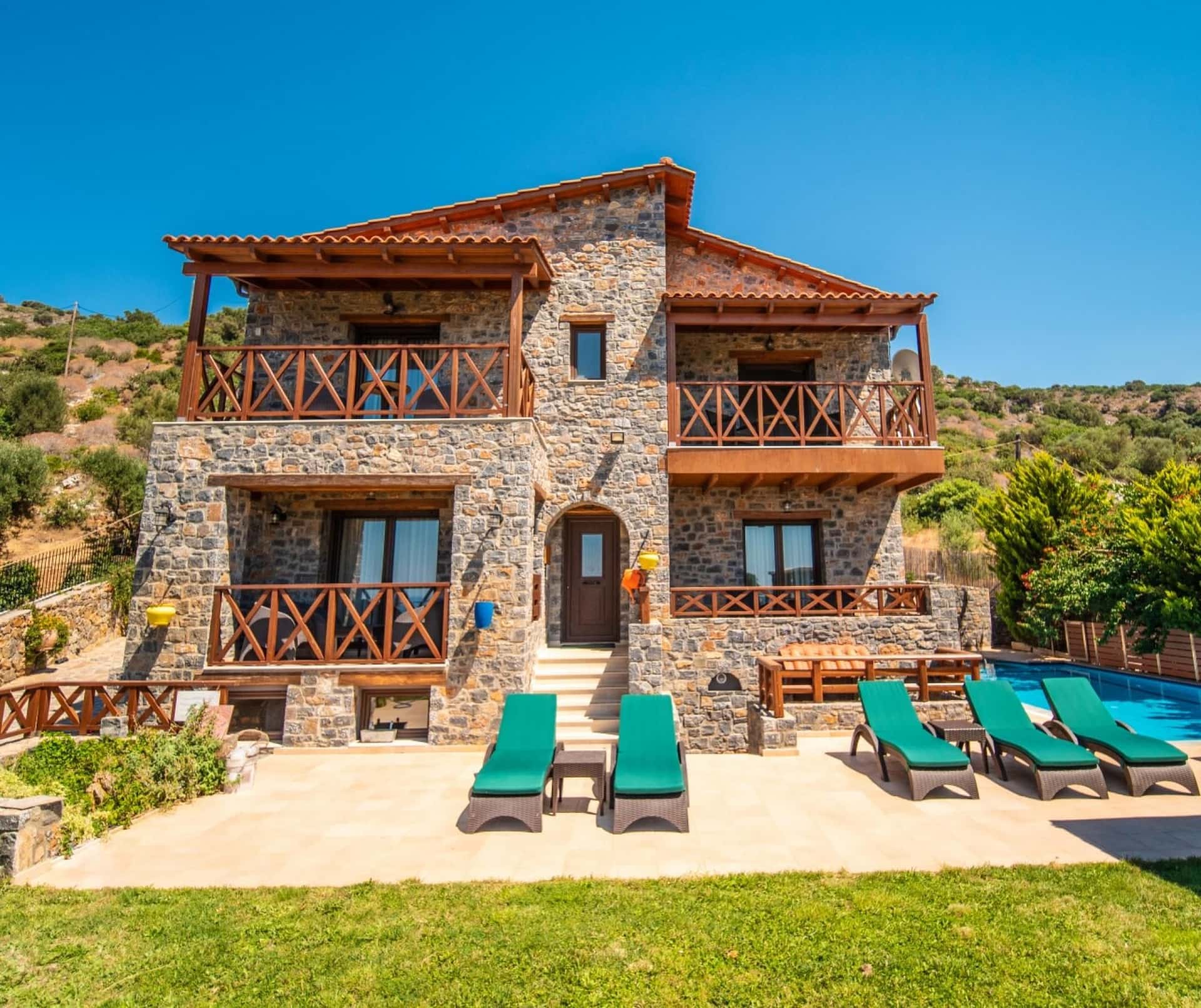

Hero image: Miguel Virkkunen Carvalho / CC BY 2.0, via Wikimedia Commons