Traditional stone villas in Crete are the island's answer to the identical white holiday box: thick walls, timber beams, courtyards shaded by vines, and villages that carry on around them. This guide covers where the best stone builds cluster, from the Heraklion wine villages to the Lasithi coast, how stone changes the feel of a summer stay, and the practical checks that matter before you book one.
Quick Summary
Traditional stone villas in Crete range from restored village houses and converted farm buildings to new villas built in local stone and wood. They cluster in the wine villages south of Heraklion, in quiet coastal spots like Milatos in Lasithi, and in the old settlements of the Rethymno and Chania countryside. Stone keeps interiors noticeably cooler in July and August, courtyards replace balconies as the heart of the house, and most of these villas come with modern additions, a private pool, air conditioning and full kitchens. Book with a car in mind and check the details that old buildings make interesting: steps, layout and shade.
Introduction
There is a moment in a stone house in Crete, usually mid afternoon in August, when you step in from the glare and the temperature drops like a curtain falling. That is the argument for traditional stone villas in Crete in a single sensation. Long before air conditioning, Cretan builders worked out how to live comfortably through fierce summers: thick stone walls, small windows on the sun side, high timber ceilings, a courtyard with a vine for shade. A good stone villa hands you that inheritance with a private pool added.
This is a different holiday from the modern hillside build with glass walls and a sea horizon. It is closer to living in the island for a week than looking at it. If that appeals, this guide is for you.
What Makes a Stone Villa Different
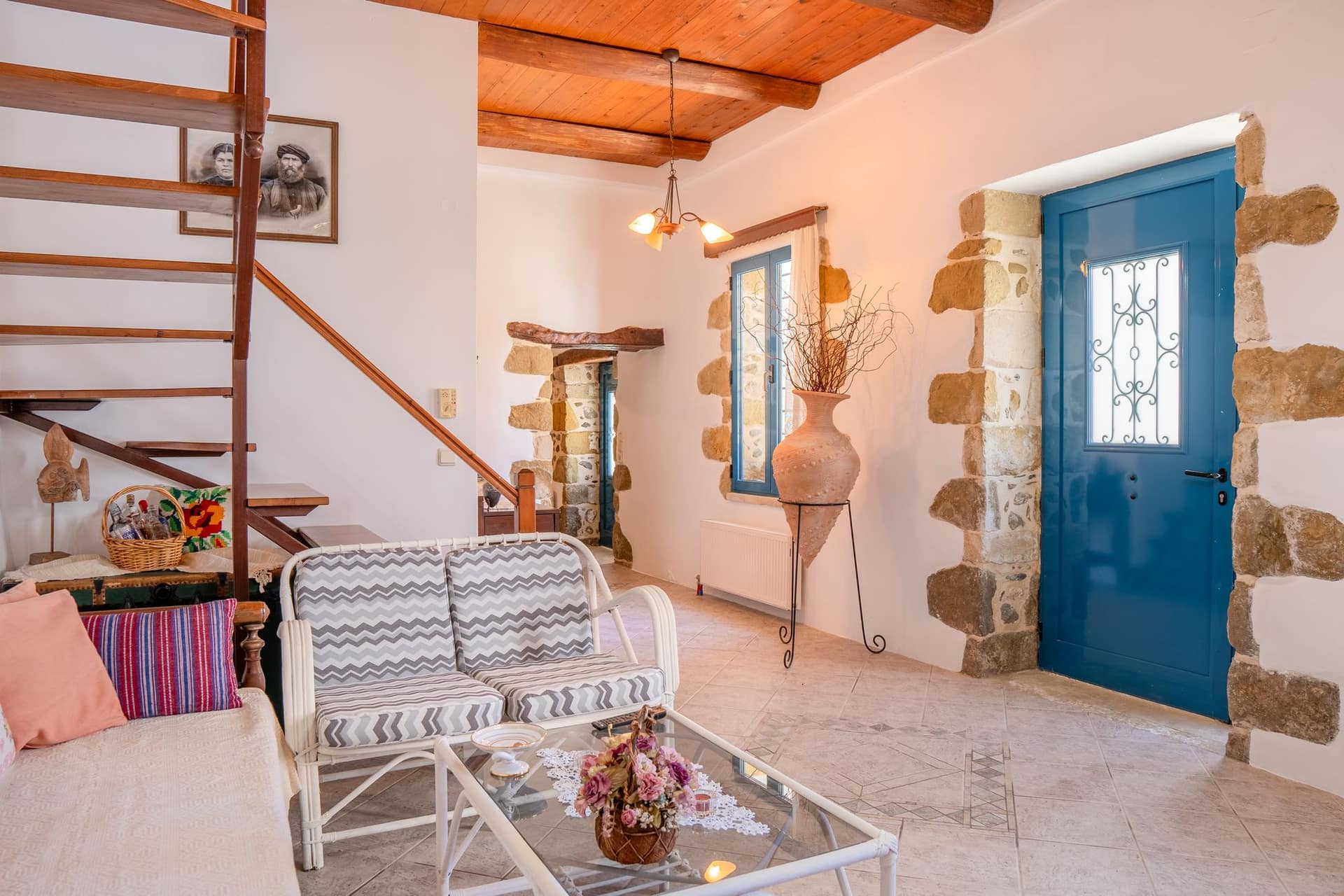
The material changes the experience in practical ways. Stone has thermal mass, so interiors warm up slowly and cool down slowly, staying pleasant at midday and mild in the evening. Rooms tend to be organised around a courtyard rather than a view, which makes the outdoor table, not the living room, the centre of the house. Older builds keep original details, arches, exposed beams, niches in the walls, and new stone and wood villas borrow the same vocabulary with better plumbing.
There is also a social difference. Stone villas usually stand in or near villages rather than on isolated ridgelines, because that is where the old houses are. You inherit neighbours of the best kind: a taverna within walking distance, a kafeneio where the same men sit every evening, a bakery that sells out by ten. For many guests that daily contact with village life, coffee ordered in bad Greek and returned with a smile, ends up being the thing they talk about at home.
It helps to know the vocabulary you will meet in listings. Stone built usually means the structure itself is local stone, not cladding over concrete. Restored or renovated points to an older building brought up to modern standards, and the year of renovation matters more than the year of construction. Stone and wood describes the classic Cretan pairing of masonry walls with timber roof beams and floors, common in both old houses and newer builds that follow tradition. None of these labels guarantees comfort by itself, which is why the checks later in this guide matter, but together they tell you what kind of house you are looking at before the photos do.
Where to Find Traditional Stone Villas in Crete
Stone builds follow the old settlement map of the island, not the resort map. These are the areas where the supply is best.
The wine villages south of Heraklion: Archanes and Kato Archanes
The Archanes area is one of Crete's best preserved village landscapes, surrounded by vineyards, with Mount Juktas above and restored stone architecture that has won conservation attention. Villas here are often stone built with walled gardens, minutes from working wineries and about twenty minutes from Heraklion and its airport. The combination of village food, wine country walks and short drives to Knossos makes this the strongest all round base for a stone villa stay.
Milatos and the quiet Lasithi coast
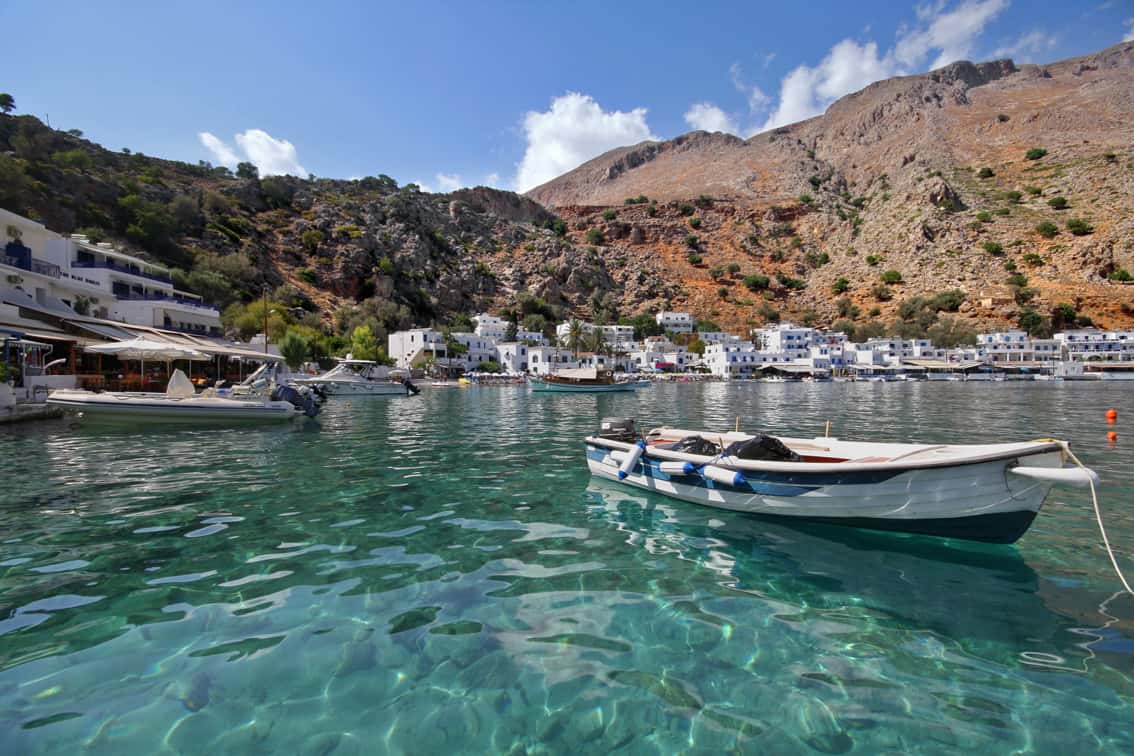
East of the Hersonissos resort strip, the shoreline calms down and villages like Milatos keep an older rhythm. Stone and wood villas here sit between hills of carob and olive and a pebble shore with family tavernas. It is the option for travellers who want stone character and a swimmable sea in the same week, with Agios Nikolaos and Elounda within easy reach for smarter evenings.
The Rethymno hinterland
Villages inland from Rethymno, including the pottery village of Margarites and the settlements toward the Amari valley, hold farmhouses and estate conversions in local stone, often set in olive groves. Distances to the Venetian old town of Rethymno are short, and the landscape is the greenest on the island in spring. This is the region for travellers whose ideal afternoon is a monastery, a ceramics workshop and a long lunch.
Apokoronas and the west
The hill villages between Chania and the White Mountains, Gavalochori and Vamos among them, are known for preserved stone architecture, old olive presses and winding lanes. Stone villas here range from village houses to larger builds with sea glimpses toward Souda Bay. The west has the deepest villa market on the island, so choice is wide, though the same is true of demand in high summer.
Stay nearby
Villas in the Cretan countryside
View countryside villas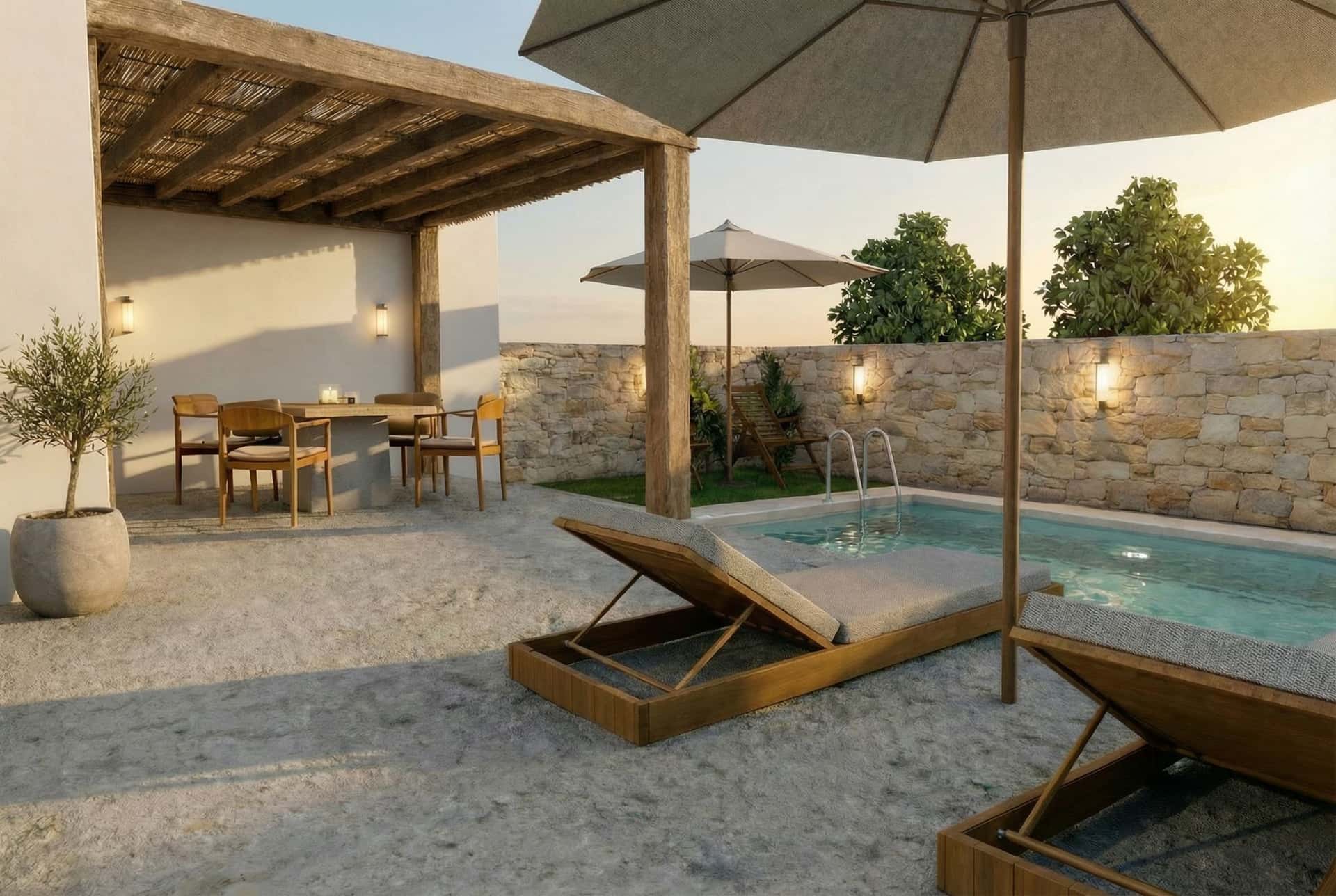
Villa Styles Within the Stone Tradition
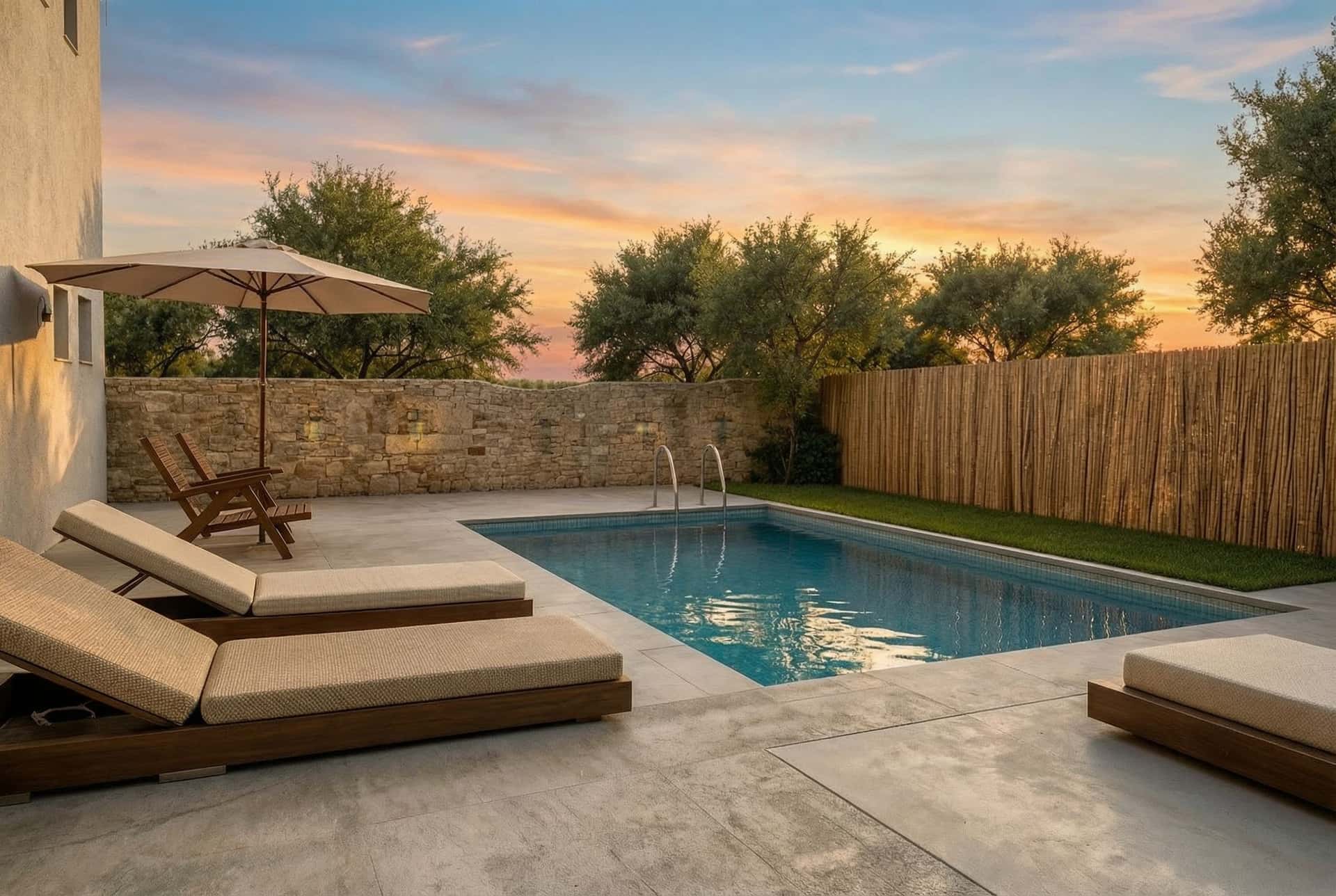
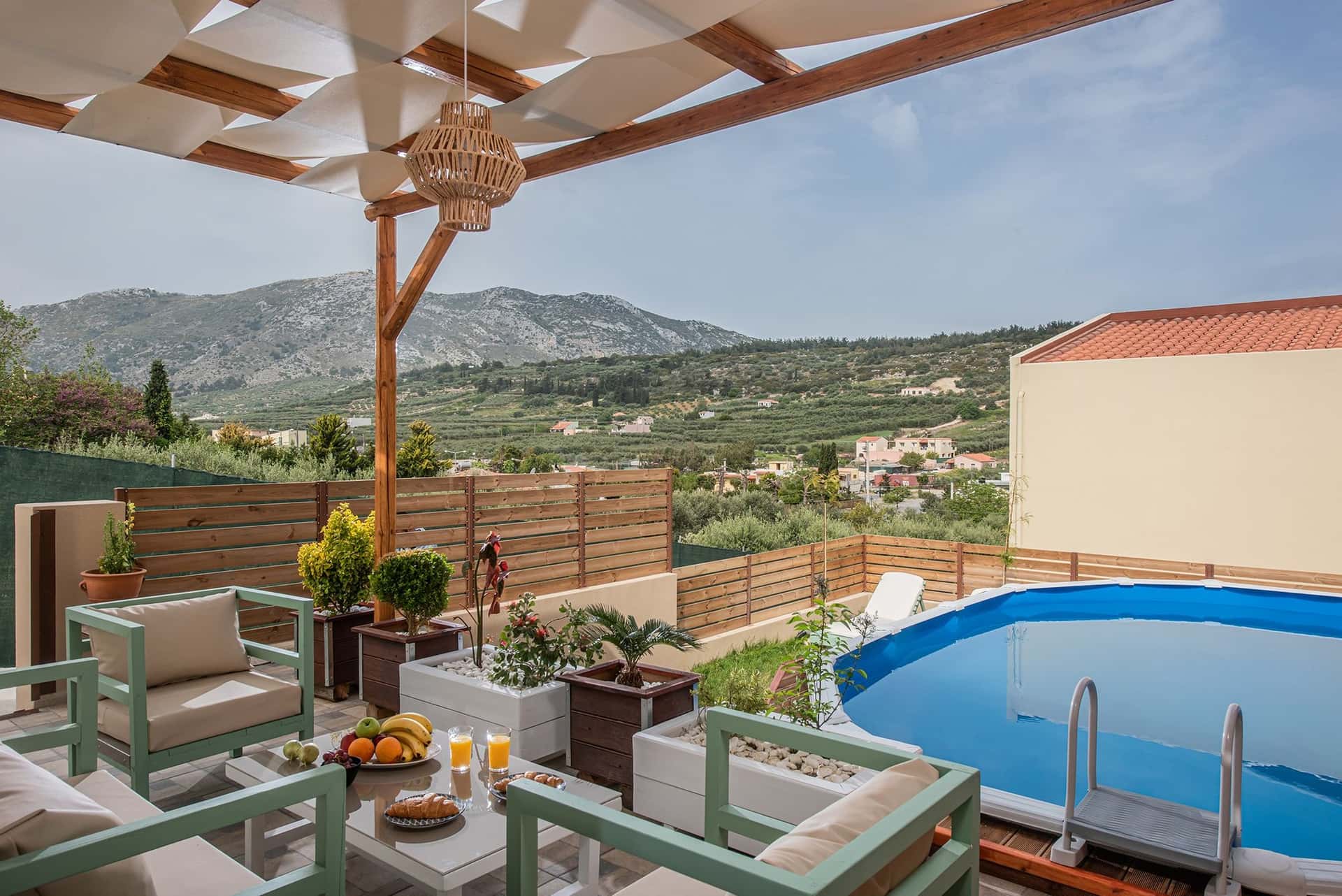
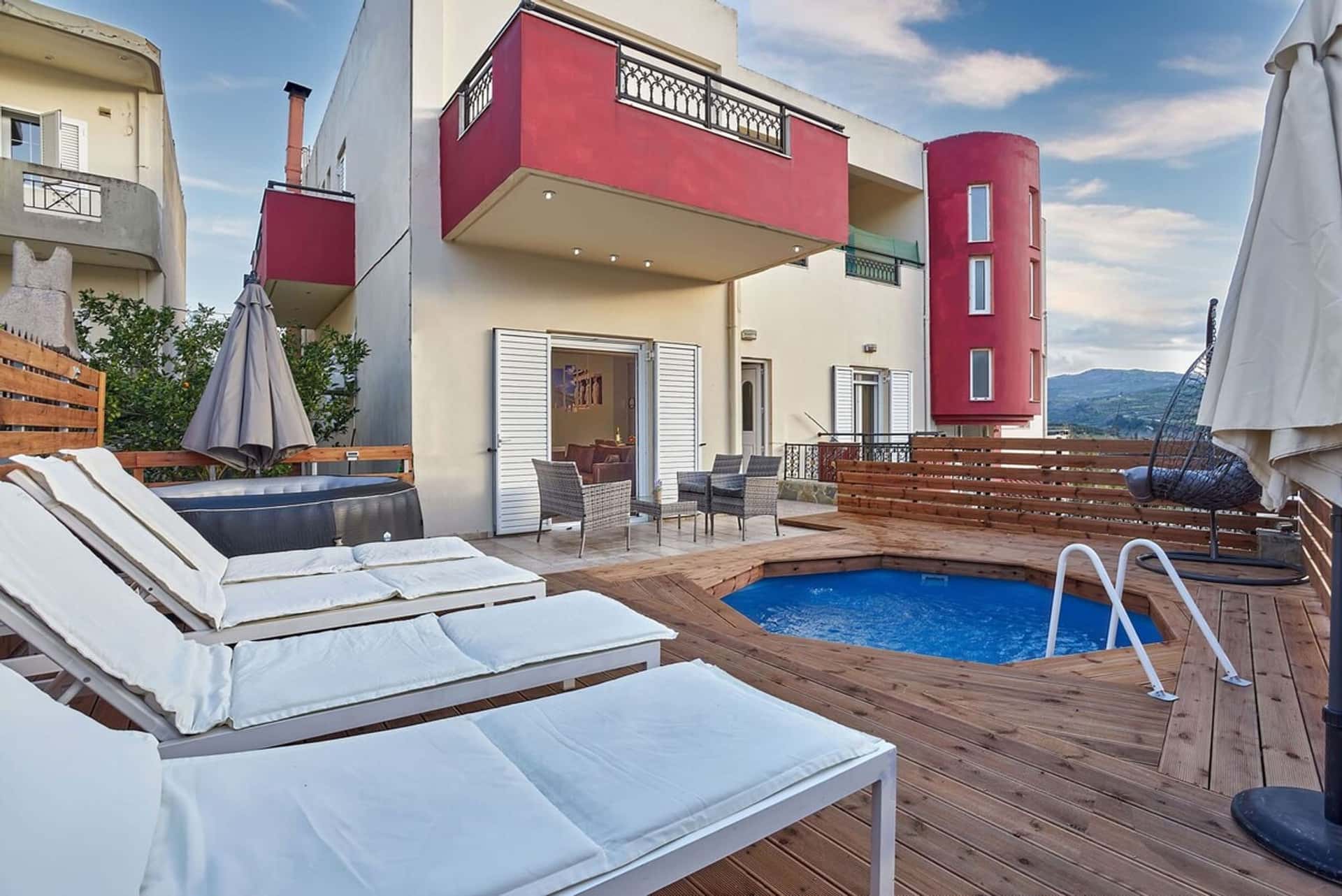
The label covers several different houses, and it helps to know which one you are booking. A restored village house sits inside the settlement, with a courtyard rather than grounds, and puts you two minutes from the taverna; it suits couples and small families who want the village on their doorstep. A converted farmhouse or small estate stands just outside the village among its own olives, with more land, more privacy and room for larger groups. A new stone and wood villa gives you the aesthetic with contemporary comforts, level floors, en suite bathrooms, proper insulation and usually the best pools. Purists prefer the first two; families with a stroller often thank themselves for choosing the third.
Group size steers the choice as much as taste. Couples fit beautifully into one and two bedroom village houses, where the courtyard is the living room and the taverna is the kitchen. Families of four or five want the farmhouse or the new build for the extra bathroom and the fenced pool. Larger parties should look at small stone complexes, two or three villas sharing land, which keep everyone together without stacking bedrooms on top of each other.
Food & Tavernas Around a Stone Villa
Staying in a village puts you inside Crete's food culture rather than beside it. Order what the kitchen decided to cook that morning: dakos with grated tomato and local cheese, slow cooked goat, snails when they are in season, fresh beans in olive oil. The wine villages around Archanes add tastings at small wineries to the routine, and coastal villages like Milatos bring fish into the picture. Shop the way residents do, bread from the bakery, vegetables from the weekly market, oil from whoever your villa's owner recommends, and the villa kitchen becomes part of the holiday rather than a chore.
Weather & Best Time for a Stone Villa Stay
Stone villas widen Crete's season at both ends. In July and August the thermal mass keeps interiors comfortable while thinner modern builds lean on air conditioning all day. In May, June, September and October the villages are at their best, warm days, cool evenings, tavernas open and unhurried. Stone houses also make the strongest case for late autumn and winter stays on the island, since many have fireplaces and feel made for green hills and long cooking evenings, though you should confirm heating and pool arrangements for anything outside the main season.
Getting There & Around
For the Archanes wine country and the Lasithi coast, fly to Heraklion; for Apokoronas and the Rethymno villages, either Heraklion or Chania works, with Rethymno sitting between the two. A hire car matters even more with village stays than with hillside villas, because the pleasures are spread out: a winery here, a gorge walk there, a beach twenty minutes away. Keep the car small. Village lanes were laid out for donkeys, and the difference between a compact and a large SUV is the difference between parking outside your door and a five minute walk with the shopping.
How to Choose the Right Stone Villa
Old buildings have personalities, so ask more questions than you would for a new build. Check the floor plan for steps and split levels, charming for most guests, awkward with toddlers or limited mobility. Confirm which rooms have air conditioning, since thick walls help but August nights still ask for it. Look at where the pool sits relative to the courtyard and whether the outdoor dining area is shaded. If the villa is inside a village, ask about parking and about the church bells, which some guests love and light sleepers should know about. And read the kitchen inventory if you plan to cook, the best stone villas pair old walls with serious equipment.
Common Mistakes to Avoid
Do not book a stone villa expecting a resort. The trade is character and village life for gyms and room service, and guests who want the second set should choose differently. Do not assume every stone build is old, or that old means uncomfortable; renovation quality varies more than age, and photos of bathrooms tell you more than photos of arches. Do not plan beach days around village bases without checking drive times, some of the best stone villages sit twenty to thirty minutes from sand. And do not arrive without cash for the kafeneio and the Sunday market, the countryside still runs partly on it.
Day Trips That Fit a Village Base
A stone villa base pairs naturally with slow excursions rather than long hauls. From the Archanes area, Knossos and the Heraklion Archaeological Museum sit within an easy morning, and the walk up Mount Juktas earns the afternoon swim. From Milatos, boats cross to Spinalonga from nearby Plaka and Elounda, and the drive up to the Lasithi Plateau passes through a string of villages that see few visitors. Rethymno bases add the Arkadi Monastery and the potters of Margarites, while Apokoronas villas keep both Chania's Venetian harbour and the beaches of the north coast in range. Two outings in a week is usually the right rhythm; the villa and the village fill the rest without effort.
Where to Stay
For the strongest combination of stone architecture, food and access, base around Archanes and Kato Archanes in the Heraklion wine country. For stone character beside the sea, look to Milatos and the calm east coast. The Rethymno hinterland suits green landscapes and pottery villages, and Apokoronas offers the widest choice in the west. The stone and stone and wood houses My Creta Villa manages sit in the first two of those areas: Kato Archanes in the wine hills, a restored house at Zaros under Psiloritis, a village house in the Messara valley, and stone builds on the Milatos coast in Lasithi. See them together on the countryside villas page, and add a winery visit or a guided walk from Travel & Do to round the week out without crowding it.
Stay nearby
Villas in the Cretan countryside
View countryside villas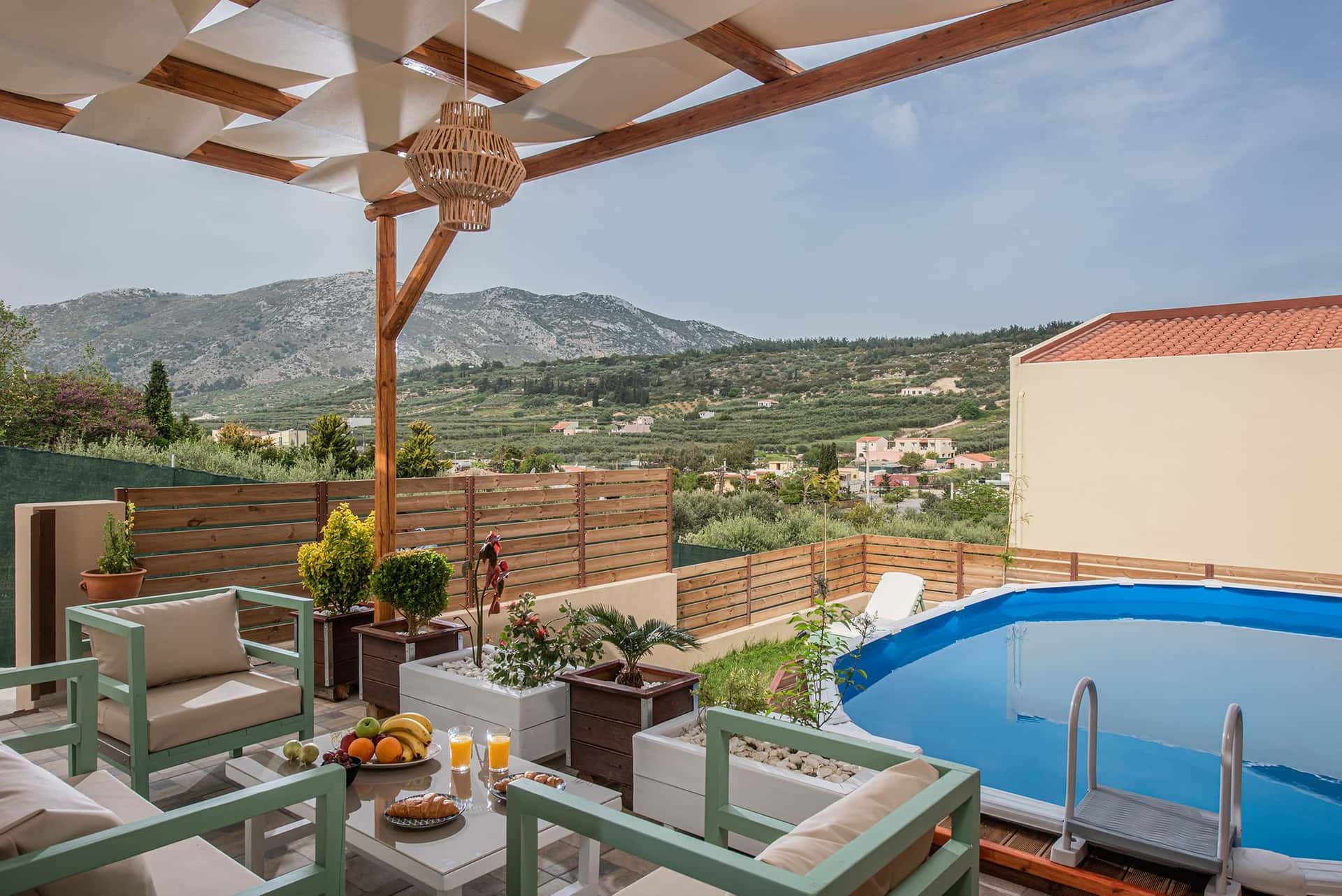
Final Thoughts
A traditional stone villa is the difference between visiting Crete and briefly belonging to it. The walls keep you cool, the courtyard holds the long dinners, and the village around you carries on with its year while you borrow a week of it. Choose the area that fits your group, ask the unglamorous questions about steps and shade, and let the house do what it was built to do three generations ago, which is make a hot island feel like home. Book the car, learn three words of Greek, and leave room in the suitcase for a bottle of the local oil.