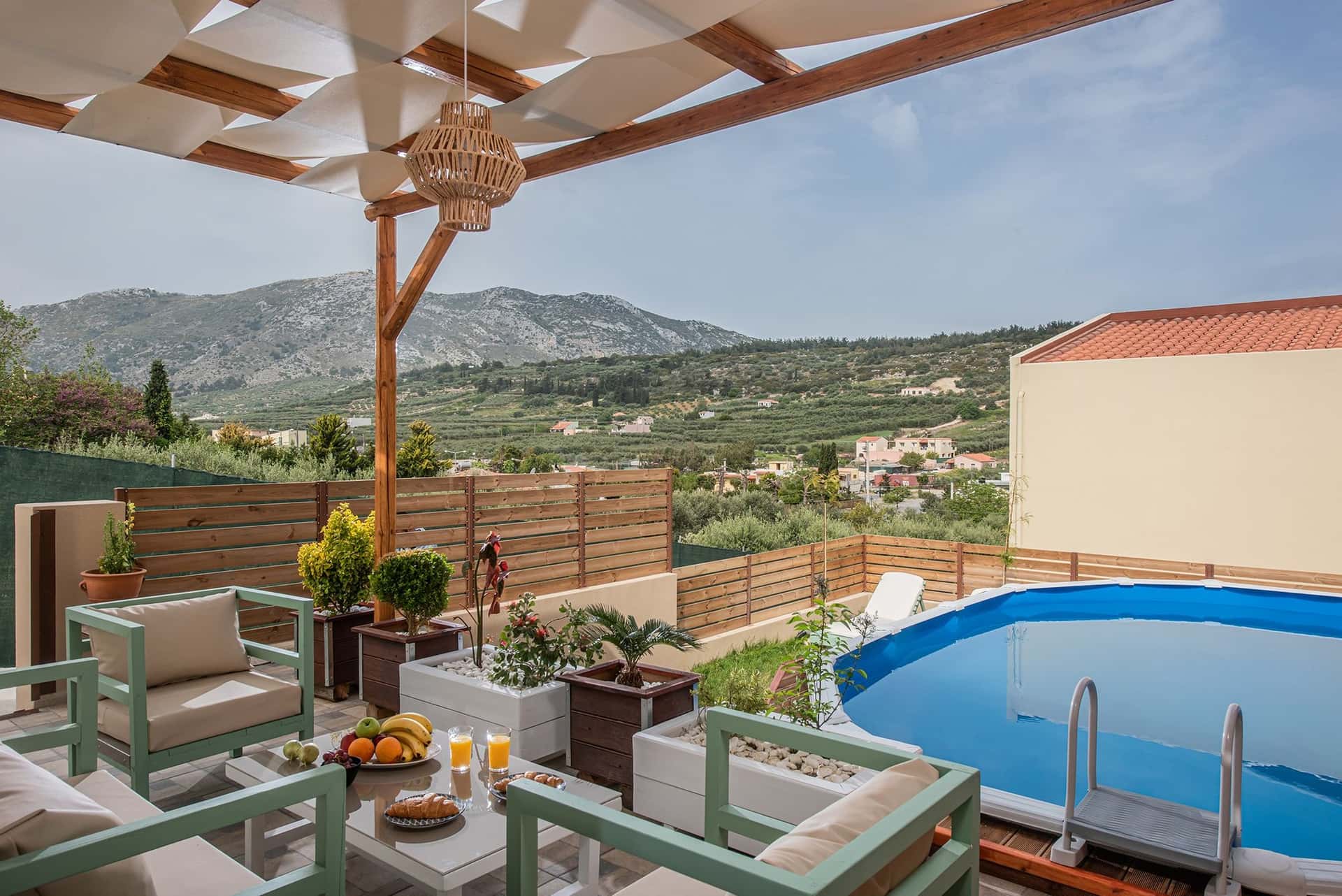
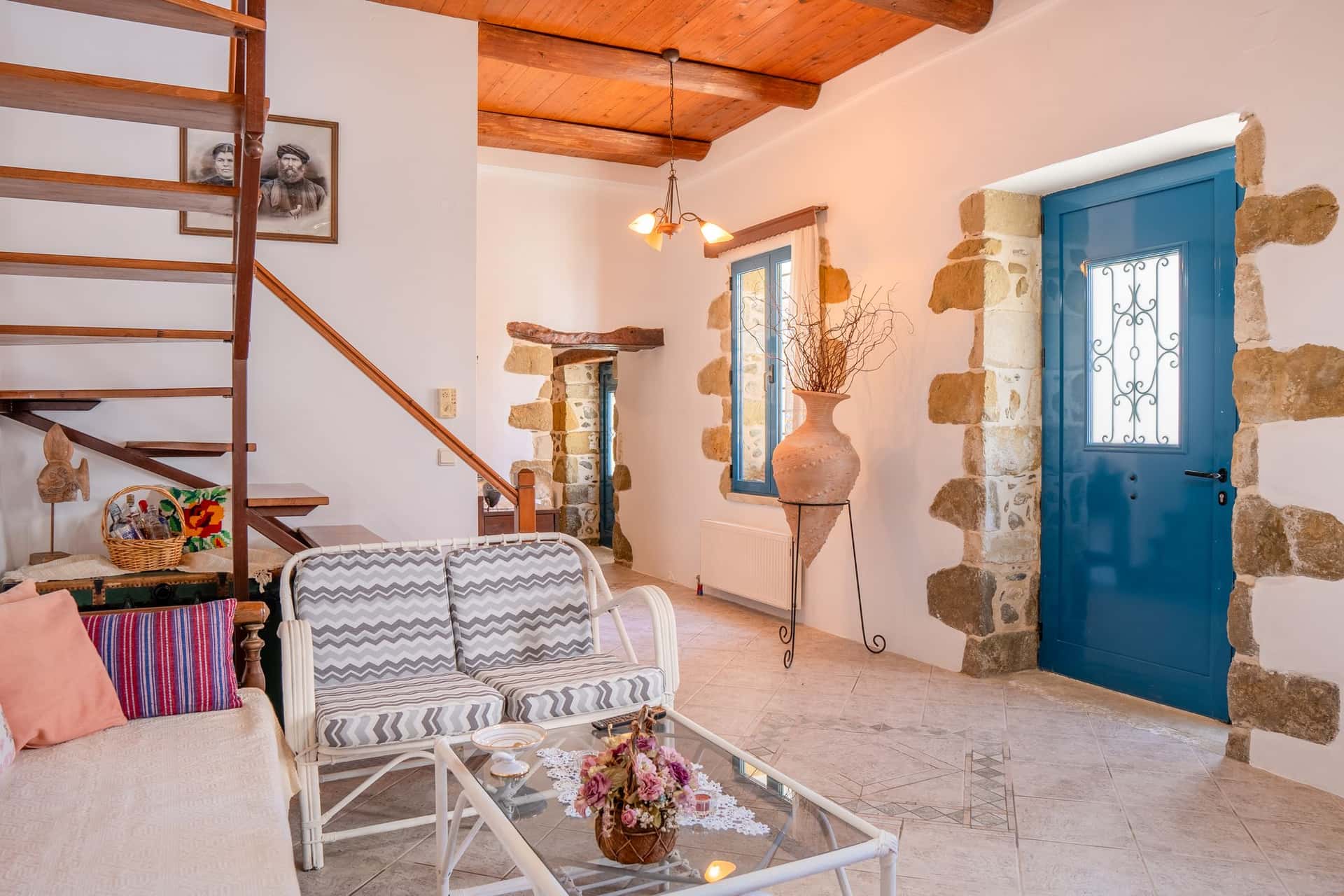
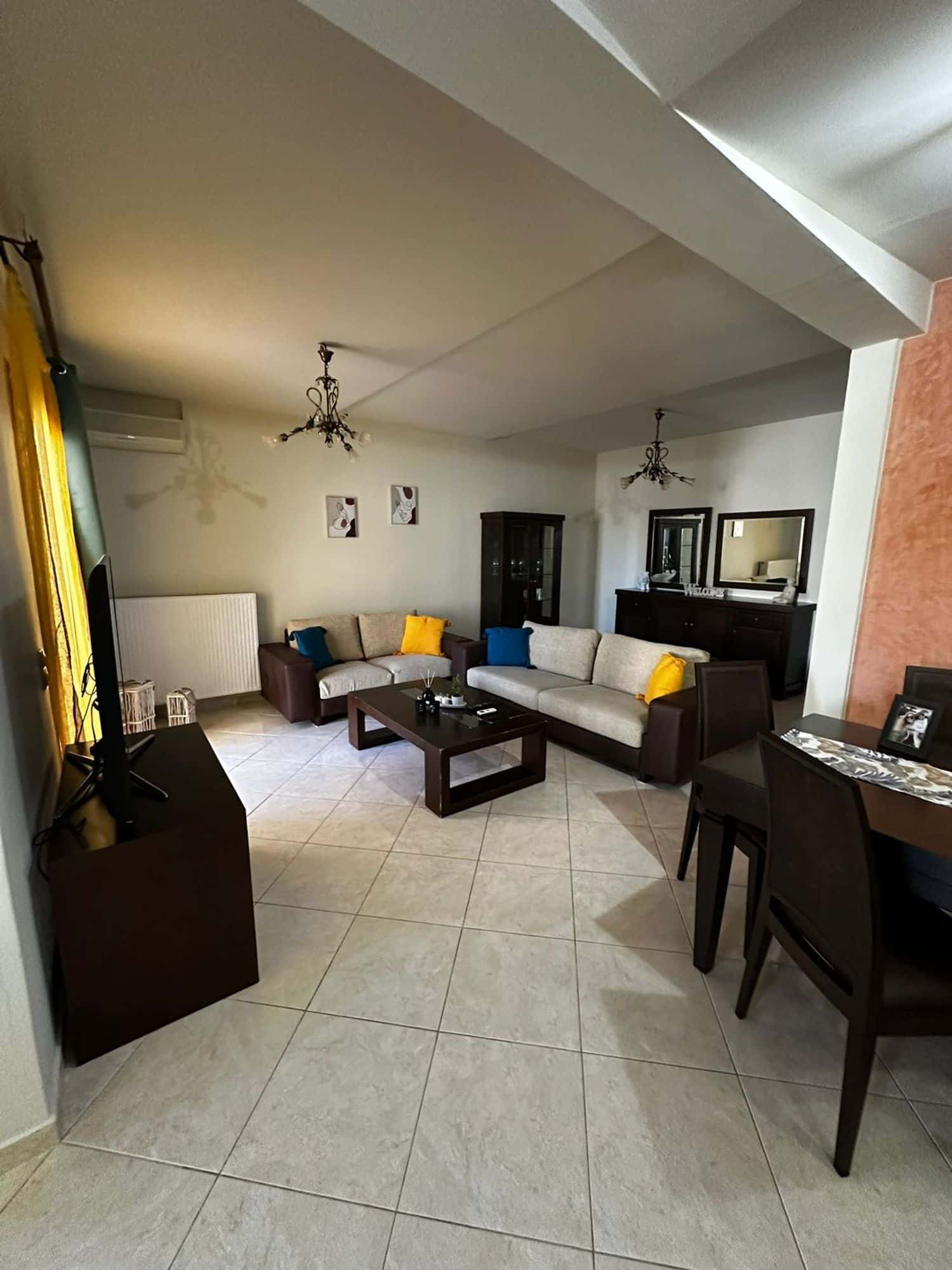
A multi family villa holiday in Crete is the trip friends keep promising each other over dinner: two or three households, one pool, shared meals and children entertaining each other for a week. The difference between the version that becomes an annual tradition and the version nobody repeats comes down to planning decisions made months before departure.
Quick Summary
A multi family villa holiday in Crete works when the property matches the arithmetic of the group: enough real bedrooms for every couple, a bathroom for every two to three people, and a layout that lets households retreat from each other between meals. Two formats deliver this, a single large villa with well-separated zones, or neighbouring villas sharing one plot, and the second is the safer bet for three families or trips including grandparents. The friendliest bases are the coast east of Heraklion, the quieter villages of Lasithi, and inland wine-country villages. Split costs by bedroom quality rather than by headcount alone, and agree the money rules before anyone books a flight.
Introduction
The idea usually starts small. Two families share a taverna table on a warm evening, the children disappear to chase the resident cat, and somebody says it: next year we should just rent one big place together. By the second glass of wine there is a third family in the plan and a rough headcount of eleven.
Turning that conversation into a good week is a specific skill, and Crete is one of the best places in the Mediterranean to practise it. The island's villa stock grew up around exactly this kind of travel: properties with 4 to 8 bedrooms, complexes where several houses share a garden and pool, kitchens sized for feeding a crowd, and villages that treat children as honoured guests rather than tolerated ones. Add a long season, two international airports and food that pleases picky eaters and adventurous ones at the same table, and the raw materials are all here.
What follows is the planning playbook: how to pick a layout, how much space the group honestly needs, where to base yourselves, how to handle money without a single awkward conversation, and the small daily systems that keep eleven people happy in one property.
Why a Multi Family Villa Holiday in Crete Works
Shared villa trips succeed for reasons that are easy to name. Children come with built-in playmates, which dissolves the entertainment burden that dominates single-family holidays; parents get adult conversation every evening without booking babysitters; and the cost of a property that would feel extravagant for one household becomes reasonable divided across two or three.
Crete adds its own advantages. The island is big, roughly 260 km long, so day trips can be tuned to each family's appetite: one household drives to a palm-fringed beach, another walks to the village bakery and back, and everyone reconvenes at the pool by four. Distances from the northern coast to shops, pharmacies and sandy beaches are short in the main villa areas, which matters with small children in the car. And the villa format absorbs the differences between families, nap schedules, dietary quirks, budget sensitivities, better than any shared hotel booking could.
The honest caveat: proximity magnifies habits. A week together will surface every difference in parenting style, tidiness and morning mood. The property you choose either gives those differences room to breathe or forces them into one kitchen. That is why layout, not location, is the first decision.
Choosing the Right Layout for Two or Three Families
One shared villa with zones
A single house suits two families with children of similar ages and parents who already holiday well together. The features that make it work are separation and duplication: bedrooms split across floors or wings so each family owns a corner, at least two living spaces so early evenings can diverge, and en-suite bathrooms for the parents. A shared villa concentrates the magic, one table, one pool, one noisy happy kitchen, but it offers nowhere to hide, so be sure the friendships are week-proof before choosing it for three households.
Neighbouring villas on one plot
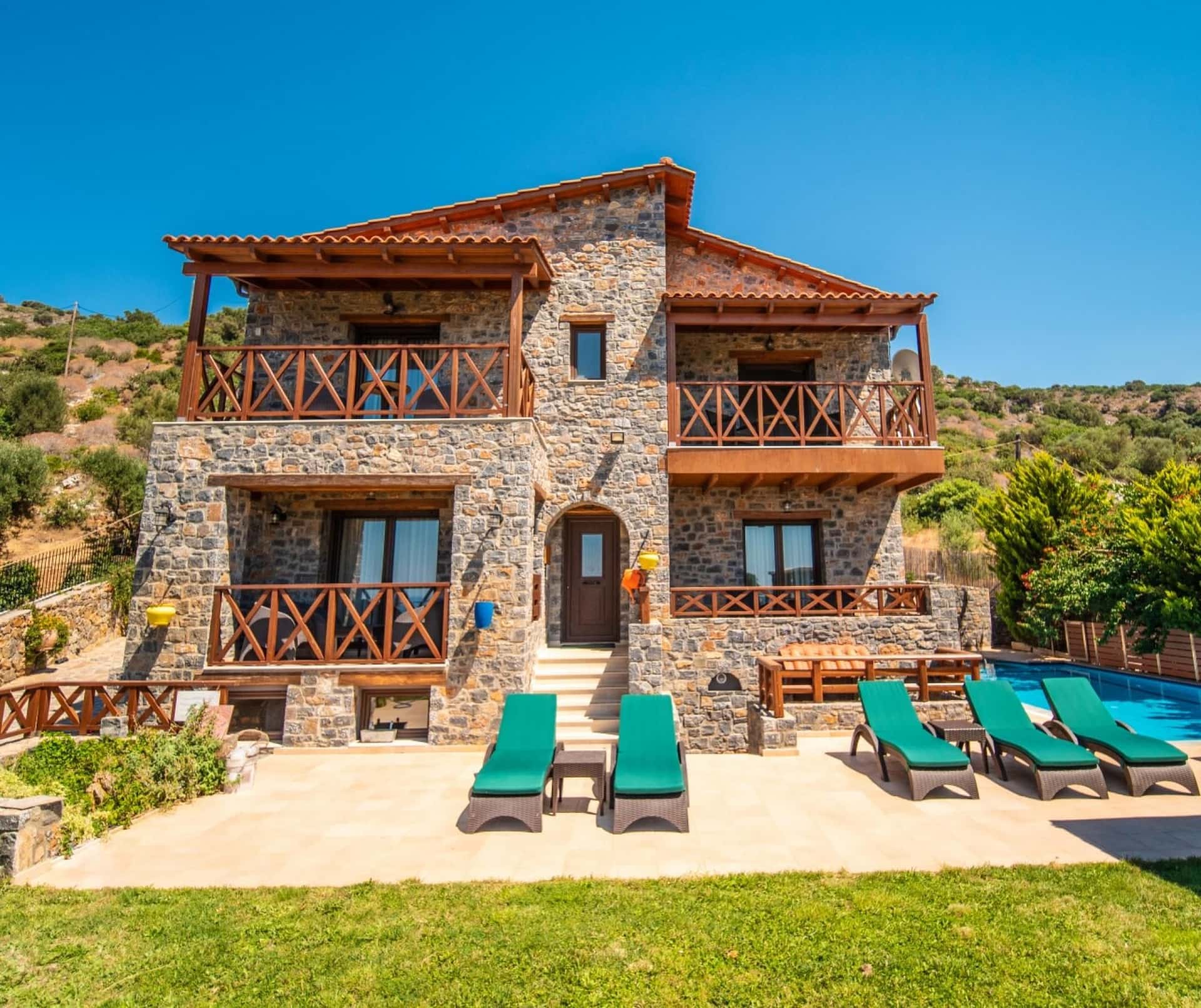
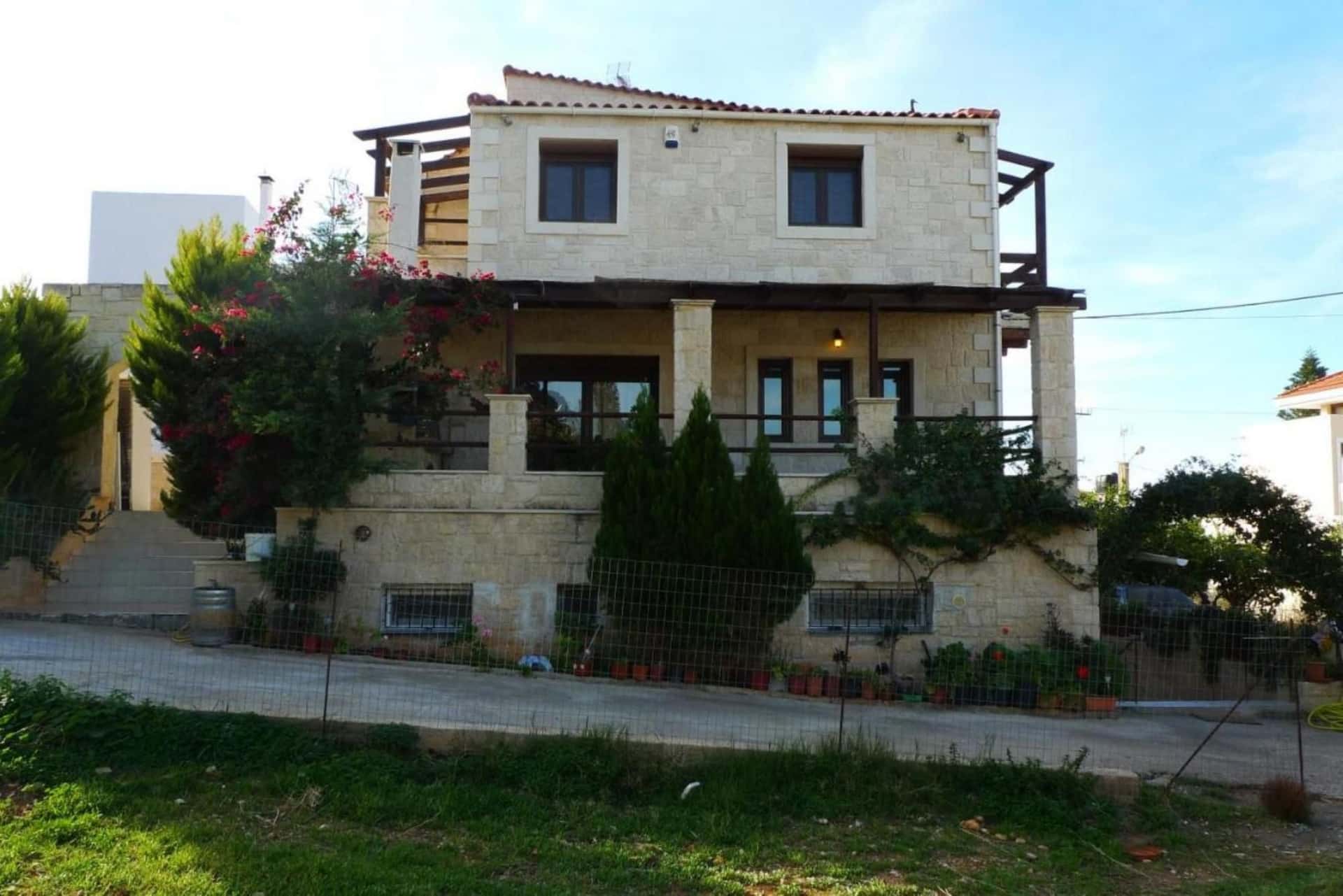
The format built for this trip: two, three or four villas standing together on shared grounds, booked as a set. Each family gets a front door, a kitchen and its own bedrooms; the pool, gardens and barbecue remain common ground. Breakfast happens in private, dinner happens together, and a toddler's 5 am start wakes exactly one household. This arrangement also solves the grandparent question neatly, a ground-floor unit close to the action but insulated from it. For three or more families, or any group mixing three generations, neighbouring villas are worth a longer search and a slightly higher budget. Our guide to large group villas in Crete covers these formats in more depth.
Stay nearby
Villas for large groups
View large group villas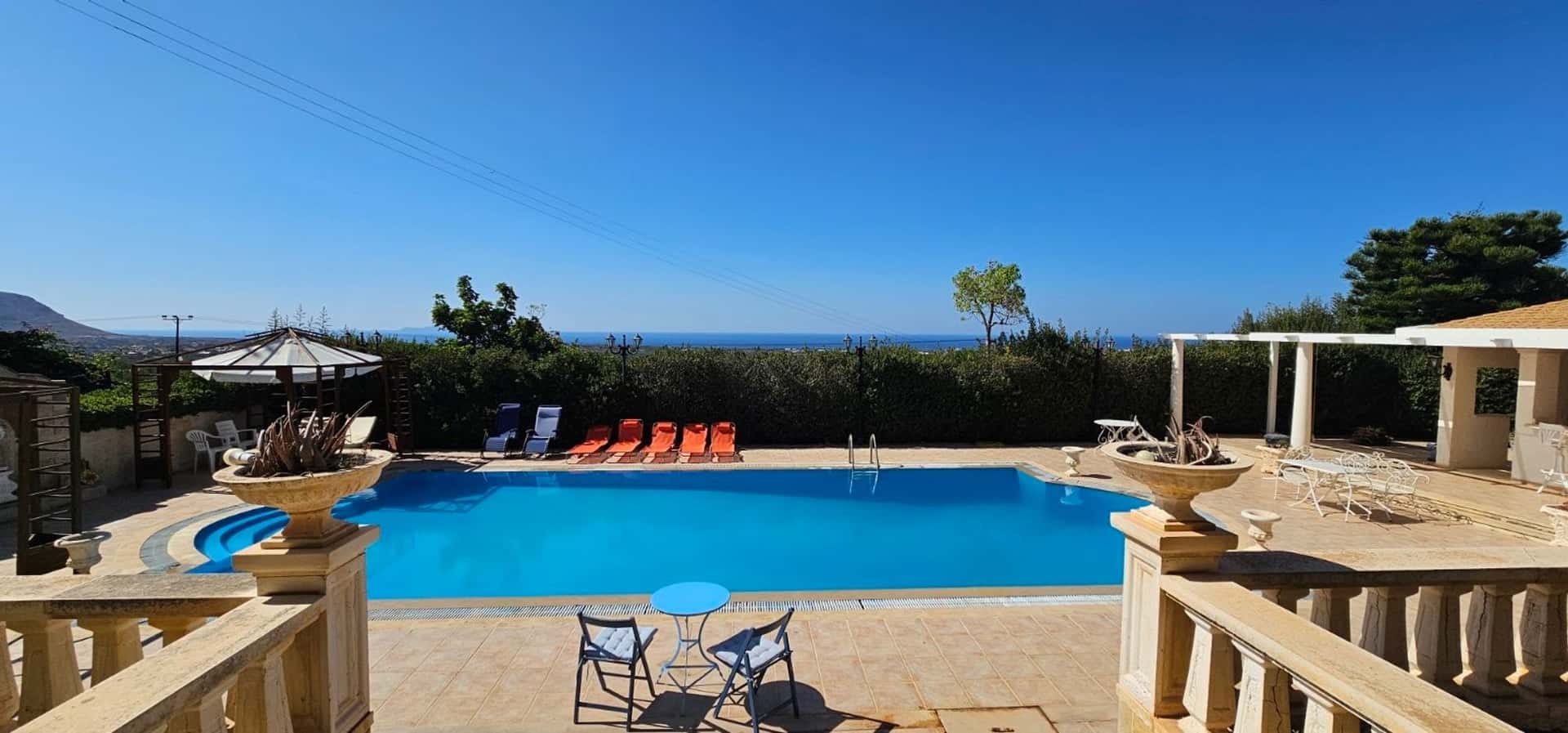
How Much Space Do You Really Need
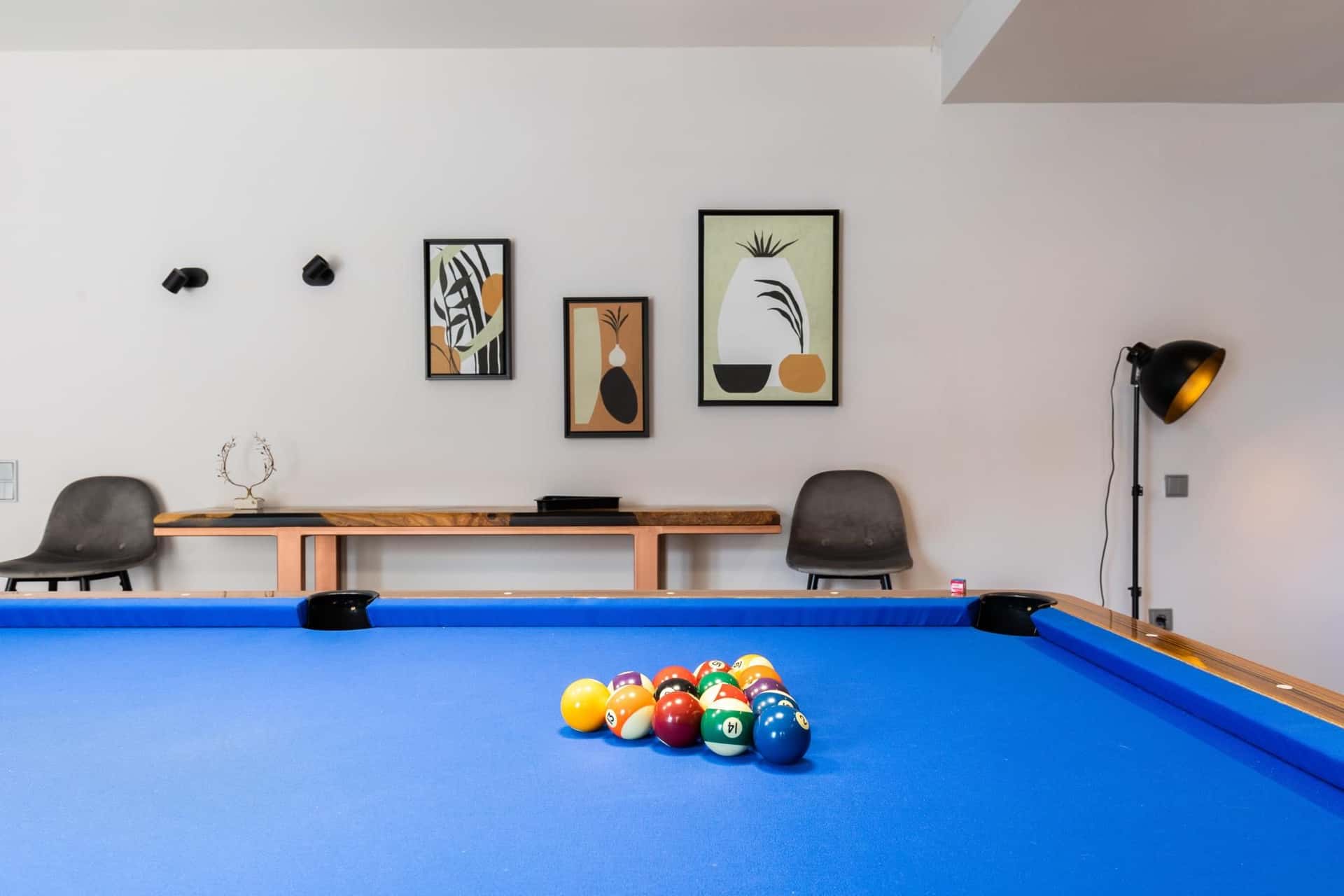
Run the numbers before falling for photographs. Count one proper bedroom per couple, one per pair of same-family children, and resist the listing's maximum occupancy figure, which usually leans on sofa beds. For a typical two-family group of nine or ten, that means 5 bedrooms; for three families, 6 to 8. Bathrooms decide the mood of the mornings: aim for one per two to three guests, and treat a property with more bathrooms than average as the tiebreaker between two shortlisted villas. Outdoor space needs the same audit. A dining table that seats the full group under shade is non-negotiable, a lawn or level terrace gives small children a pool-free play zone, and gated or fenced pool access is worth prioritising for any group with under-fives. Finally, check the washing machine exists and works; families with young children run it daily. For a broader look at choosing by region and season, see our guide to family villas in Crete.
Best Areas for Families Travelling Together
Around Hersonissos and Anissaras
The stretch of coast east of Heraklion is the low-friction choice. Airport transfers stay under an hour, which is the difference between children arriving cheerful and arriving broken. Hersonissos and Anissaras put supermarkets, pharmacies, sandy beaches and family tavernas minutes from the villa, so forgotten nappies and impromptu ice creams never derail an afternoon. The area also keeps non-drivers happy, since evenings out do not always require a designated driver.
Milatos and the quieter east
Families who want calm without isolation look to Lasithi. Milatos keeps a fishing-village pace with a pebble shoreline and tavernas where the owner remembers your children's names by day three. Agios Nikolaos, with its lake harbour, and the upscale terraces of Elounda sit within easy reach for bigger evenings out, and the boat trip towards Spinalonga island makes a group outing that works for every age in the party.
Village bases inland
Inland villages such as Kato Archanes, among the vineyards south of Heraklion, reward groups whose children are past the beach-every-day stage. Plots are bigger, stone villas come with real gardens, village squares supply evening entertainment for free, and the coast stays about half an hour away. Budgets stretch further here too, which for a three-family booking can fund an extra experience day or a private cook for one celebration dinner.
Splitting the Costs Without Awkwardness
Money quietly ruins more shared holidays than weather does, and the fix is decided before booking, not during the trip. Start with the villa rate: an equal split per family is simple but only fair when the bedrooms are comparable. When one family takes the master suite with the sea-view terrace and another takes twin rooms by the laundry, weight the shares, a common approach is splitting half the cost equally between families and the other half by bedroom quality or headcount. Put the agreed split in the group chat in writing. For daily spending, a shared kitty works better than receipt-tracking: everyone pays a fixed amount in at the start, groceries, taverna dinners and fuel come out of it, and it gets topped up when empty. Big optional extras, boat days, spa visits, babysitting, stay outside the kitty so nobody funds someone else's indulgence. One person holds the kitty, a different person books the restaurants, and the jobs rotate next year.
Meals, Kitchens and the Daily Rhythm
Food is the engine room of a shared week, and Crete makes it easy. Do one heavyweight supermarket run on arrival day, then shop like locals: bakery each morning for bread and pastries at a euro or two a head, butcher for barbecue nights, roadside stalls for tomatoes and melons that need no improvement. A workable rhythm is breakfasts per family in their own time, lunches loose around the pool, and one proper shared meal daily, alternating villa cooking with village tavernas. Cooking duty runs in pairs from different families, which turns dinner into a friendly competition within two nights. When the group books a taverna, call a day ahead for a long table; village places will push tables together for twelve and bring plates for sharing, dakos, grilled meats, stuffed vegetables, greens, without anyone negotiating individual orders for six children. Budget relief is built in: a taverna spread with house wine typically costs less per head than a single resort-restaurant main.
Keeping the Kids Happy (and the Adults Sane)
The children are the easy part; they arrive with friends. The structure that helps is loose but real. Mornings belong to the pool or the beach while energy is high. The heat of early afternoon suits shade, screens and naps without guilt. Late afternoons take excursions, and evenings stretch long because dinner at nine among other children doing the same is normal here. Plan one genuine outing every other day at most, a boat trip, the palace at Knossos turned into a maze-and-minotaur story, a water park near Hersonissos, and declare the days between officially planless. Two safety systems earn their place with a big group: a pool-watch rota with a named adult on duty whenever under-eights are in the water, and a phone-numbers-in-pockets habit for market visits. The adult payoff comes at night: with bedrooms full and a baby monitor propped on the terrace table, the evening belongs to the grown-ups, no babysitter invoice attached.
Weather and Best Time to Go
For school-age families the calendar decides: July and August bring dependable heat in the mid-30s, warm seas and the year's highest prices, so booking the villa 9 to 12 months out is the rule for those weeks. Groups with pre-school children hold the trump card of term-time freedom: June and September offer the same pools and beaches with gentler heat, calmer roads and rates a tier lower. May and October work for adults-and-babies groups, with the note that evenings cool down and unheated pools turn bracing, which makes a heated pool the filter worth applying at those margins.
Getting There and Around
Fly into Heraklion for the east and centre of the island or Chania for the west; the flight from Athens takes about 1 hour, and overnight ferries from Piraeus reach Heraklion in roughly 9.5 hours for families who prefer cabins and sea air to airport queues. On the island, a multi-family group travels best with two hire cars rather than one large van: pickup runs, split itineraries and independence for each household. Fit child seats at booking time, not at the rental desk, and agree the driver rota alongside the money rules. Villas in resort areas keep essentials walkable, but count on driving for beaches, markets and the trips that make the week.
Common Mistakes to Avoid
The recurring ones, from families who learned them the expensive way. Believing the maximum occupancy number and arriving to find two of the beds are sofas. Booking a dramatic clifftop villa with an unfenced pool and spending the week on toddler patrol instead of holiday. Leaving the cost split vague until the final-night reckoning sours the taverna dinner. Scheduling an outing every single day, then wondering why everyone is exhausted and nobody swam in the pool they paid for. Assuming another family's definition of clean, quiet or bedtime matches yours, ten minutes of expectations talk before booking prevents most week-two friction. And underestimating arrival day: land, shop, swim, eat, sleep is a full itinerary with children; save the first excursion for day three.
Where to Stay
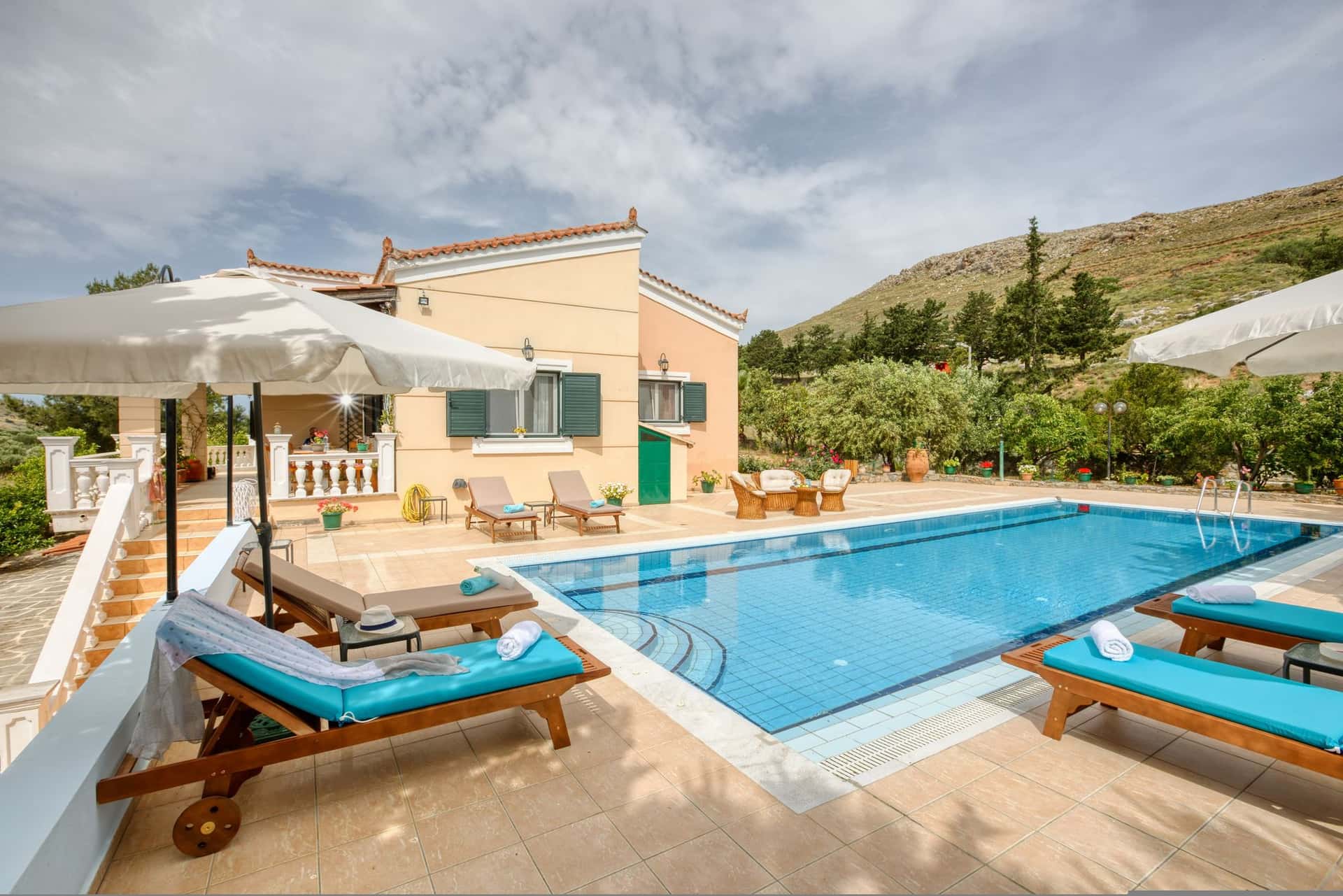
Match the format to the group before browsing photographs. Two close-knit families: a single 5 bedroom villa with two living spaces, based near Hersonissos or Anissaras for logistics, or inland for space and value. Three families or three generations: neighbouring villas on one plot, with Lasithi and the Heraklion countryside offering the strongest examples, and ground-floor bedrooms reserved for the grandparents. My Creta Villa manages exactly these formats, from large single villas to multi-unit complexes with shared grounds, with the strongest options along the coast east of Heraklion and in Lasithi. Browse family villas for properties with the kit small children need, or large group villas for the full-size complexes, and curated experiences from Travel & Do cover the boat days and cooking sessions that give a shared week its stories.
Stay nearby
Villas for large groups
View large group villas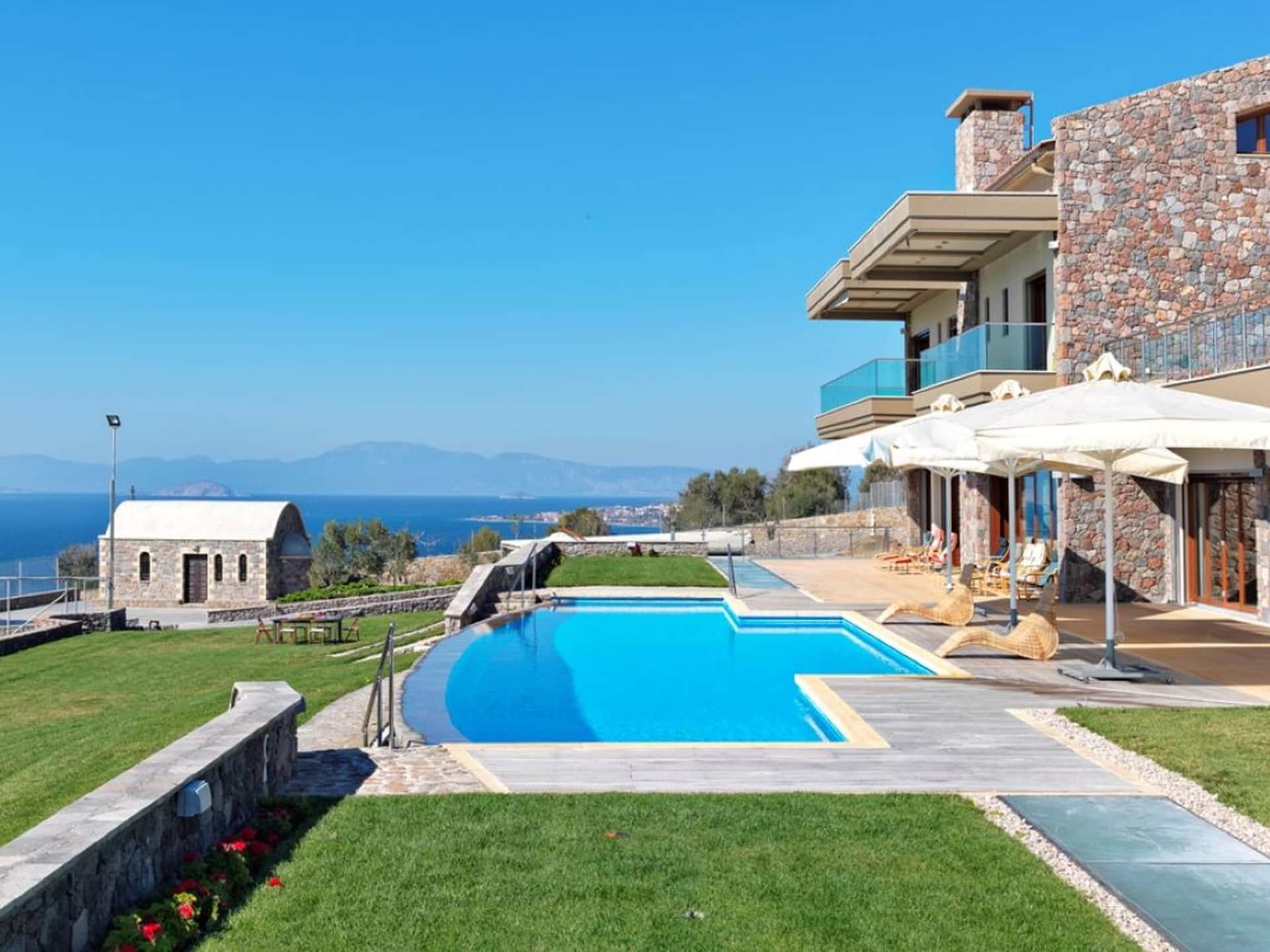
Final Thoughts
A multi family villa holiday runs on three agreements: the right layout for the number of households, money rules written down early, and a rhythm that alternates together-time with breathing room. Crete supplies everything else, the villas built for sharing, the food that feeds a crowd well and cheaply, the villages that fold children into the evening, the sea. Get the three agreements right and the hardest question of the week becomes whose family hosts the reunion dinner back home, and which week you are all booking for next year.